
 "image")

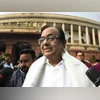
Who is P Chidambaram?
Palaniappan Chidambaram is the former Finance and Home Minister of India and a member of the Rajya Sabha. He was born on September 16, 1945, in Chennai, Tamil Nadu.
Education
P Chidambaram completed his schooling at the Madras Christian College Higher Secondary School in Chennai. After completing his school education, he enrolled in Loyola College in Chennai and passed the one-year pre-University course. He then went on to complete his Bachelor of Law from the Madras Law College in 1966.
Chidambaram's educational qualifications are not limited to law. He also holds an MBA from the prestigious Harvard Business School in the United States. Chidambaram's qualifications in law and business have helped him in his political career, especially during his tenure as the Finance Minister of India.
Chidambaram's educational qualifications are not limited to law. He also holds an MBA from the prestigious Harvard Business School in the United States. Chidambaram's qualifications in law and business have helped him in his political career, especially during his tenure as the Finance Minister of India.
Political career
Chidambaram started his career as a lawyer and began practicing in the Madras High Court. He later shifted to Delhi and entered politics in the early 1980s. In 1984, he was elected to the Lok Sabha from the Sivaganga constituency in Tamil Nadu. He was re-elected from the same constituency in 1989 and 1991.
Chidambaram was first appointed as the Minister of State for Personnel, Public Grievances, and Pensions in 1986. He was later appointed as the Minister of State for Commerce in 1989. In 1991, he was appointed as the Minister of State for Commerce and Industry, and later as the Minister of State for Finance.
In 1996, Chidambaram was appointed as the Finance Minister of India in the United Front government. He presented the 1997 Union Budget, which was widely praised for its focus on fiscal consolidation and structural reforms. However, his tenure as Finance Minister was marked by a severe economic crisis, which was triggered by external factors such as the Asian financial crisis and internal factors such as drought and a fall in agricultural output.
Chidambaram was re-elected to the Lok Sabha from the Sivaganga constituency in 1998 and 1999. He was appointed as the Minister of Home Affairs in the UPA-I government in 2004. During his tenure as Home Minister, he played a key role in the formulation of the National Rural Employment Guarantee Act (NREGA), which is considered to be one of the landmark social welfare schemes in India.
In 2008, Chidambaram was appointed as the Finance Minister of India for the second time in the UPA-I government. He presented the 2008 Union Budget, which was aimed at reviving the economy in the aftermath of the global financial crisis. He introduced various measures such as a stimulus package, tax cuts, and increased public spending to boost the economy.
Chidambaram's tenure as Finance Minister was also marked by various controversies. In 2012, he was accused of facilitating the sale of telecom licenses to private companies at below-market prices during his tenure as the Finance Minister in 2008. He was arrested by the Central Bureau of Investigation (CBI) in August 2019 in connection with the case. He was later released on bail.
Chidambaram has also been involved in various international forums and has represented India in the World Bank, the International Monetary Fund (IMF), and the G-20. He has also been a member of various parliamentary committees, including the Standing Committee on Finance and the Committee on Public Accounts.
Chidambaram has faced controversies on account of his son being accused of corruption in the Aircel-Maxis and INX cases.