FMCG capacity utilisation surges to 70-75% as lockdown curbs ease

The only exception here is Hindustan Unilever (HUL), the country's largest FMCG company, which is opearting at 80 per cent capacity utilisation.
fmcg,, goods, jobs, manufacturing, msme, workers, farm product, food processing, sales, beverage, non-essential, essential, market, supermarket, stores, jobs
Analysts tracking HUL said the firm had increased hand sanitiser production by nearly 60 times compared with pre-Covid levels, even as migrant labour shortage plagued the company as well as the industry as a whole.
Viveat Susan PintoArnab Dutta Mumbai/New Delhi
4 min read Last Updated : May 28 2020 | 2:43 AM IST
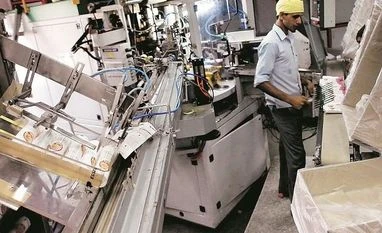
Manufacturing activity at most plants of leading fast-moving consumer goods (FMCG) companies has sharply improved in May as lockdown curbs have eased in many parts of the country.

From levels of 20-40 per cent in April, capacity utilisation now stands at 70-75 per cent for most firms, conversations with companies, analysts, and industry sources have revealed. The only exception here is Hindustan Unilever (HUL), the country's largest FMCG company, which is operating at 80 per cent capacity utilisation.

Sanjiv Mehta, chairman and managing director, HUL, had indicated earlier that the company was keen to ramp up production levels, especially of essential items. Most other companies have also said their focus on essential products is higher at this point since demand for them is more.

An HUL spokesperson said, "During these challenging times, we are making all efforts to ensure we meet the consumer demand for essential products, such as hand wash, hand sanitiser, floor cleaners, and hygiene products. On Lifebuoy hand sanitiser, for instance, we've increased production significantly from pre-Covid levels. We are ramping up production while maintaining strict quality standards."

Analysts tracking HUL said the firm had increased hand sanitiser production by nearly 60 times compared with pre-Covid levels, even as migrant labour shortage plagued the company as well as the industry as a whole.
 
Suresh Narayanan, chairman and MD, Nestle India, which makes Maggi and other packaged foods, said the initial challenge of arranging transportation for movement of raw material and finished goods had eased, though obtaining permits and e-passes for inter-state transport remained. "We have now managed to scale up manufacturing to 70 per cent of capacity and all our eight plants are running. However, a gap with normal level of operations still remains. We are urging authorities to raise the limit to at least 75 per cent," he said.  


In an investor call last week, Marico's MD & CEO Saugata Gupta said the company's capacity utilisation had improved to levels of about 75 per cent (in May) and that the firm was looking to increase direct distribution reach in rural as well as urban areas.This was aimed at making the company future-ready as firms with the ability to reach retail stores directly had a better advantage over those who depended on distributors and wholesalers in a post Covid-19 world.
"I believe that two things will happen," Gupta said. "Companies with direct rural distribution are likely to gain since the wholesale channel in rural areas will remain challenged. This is owing to restricted movement within districts and the fear of people attached to the wholesale channel to travel to the nearest urban centre to pick up goods. Second will be the return of the kirana. People are going to prefer making quick shopping trips to the nearest retail point in the post-Covid world with social distancing in mind. So companies with direct distribution in urban areas are also going to gain,” he said.

Companies are also seeing a preference for value packs among consumers in general trade, especially in rural areas, though bulk-pack consumption in modern trade remains high. “We find that low-unit pack consumption in rural areas is fairly high right now and we are ensuring that we can meet this demand, which is coming from smaller centres,” said Mayank Shah, senior category head, Parle Products.
 
Narayanan, too, alluded to distribution and demand being better in smaller towns, a key reason being the presence of metros and larger cities in red zones. Analysts have also said a resurgence in demand is likely in rural areas first, before moving to urban centres, since the latter remains in semi-lockdown mode and the migrant population in villages will ensure an offtake of daily-use items.
 

One subscription. Two world-class reads.

Already subscribed? Log in

Subscribe to read the full story →
*Subscribe to Business Standard digital and get complimentary access to The New York Times

Smart Quarterly

₹900

3 Months

₹300/Month

SAVE 25%

Smart Essential

₹2,700

1 Year

₹225/Month

SAVE 46%
*Complimentary New York Times access for the 2nd year will be given after 12 months

Super Saver

₹3,900

2 Years

₹162/Month

Subscribe

Renews automatically, cancel anytime

Here’s what’s included in our digital subscription plans

Exclusive premium stories online

  • Over 30 premium stories daily, handpicked by our editors

Complimentary Access to The New York Times

  • News, Games, Cooking, Audio, Wirecutter & The Athletic

Business Standard Epaper

  • Digital replica of our daily newspaper — with options to read, save, and share

Curated Newsletters

  • Insights on markets, finance, politics, tech, and more delivered to your inbox

Market Analysis & Investment Insights

  • In-depth market analysis & insights with access to The Smart Investor

Archives

  • Repository of articles and publications dating back to 1997

Ad-free Reading

  • Uninterrupted reading experience with no advertisements

Seamless Access Across All Devices

  • Access Business Standard across devices — mobile, tablet, or PC, via web or app

Topics :CoronavirusLockdownFMCG salesFMCG companiesFMCGsFMCG sectorHindustan UnileverNestle India

Next Story



