Infosys takes a step towards going green
Company aims to commission 55 Mw of solar plants by end of 2016
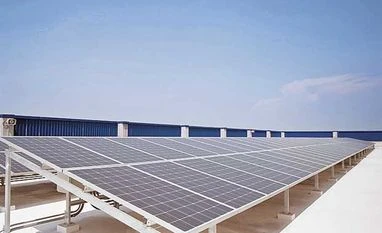
Bibhu Ranjan Mishra Bengaluru Infosys, the country’s second-largest information technology services company, is pushing the use of renewable energy to reduce its carbon footprint. It is installing solar power plants that can produce 55 Mw of electricity by end of next year. This would cater to close to a third of its annual energy requirement.
“By December, we would be commissioning 15 Mw of solar plants in our campuses, including a 7-Mw solar power plant, set up at our new campus in Hyderabad. We would also be adding 40 Mw next year,” said Ramdas Kamath, executive vice-president and head of infrastructure, facilities, administration. Last year, Infosys consumed 257 million units for all its facilities in the country. Of that, around 30 per cent were renewable energy purchased either from the wind energy or hydro power producers.
“We need another 178 Mw of installations to convert our entire power consumption to renewable energy, which we would do over a period of time. It requires land and other things. But technically, it is possible, as we can do it by purchasing green energy.”
As a part of its assurance to the United Nations in 2008, Infosys had said it would reduce its per capita consumption of power and water by 50 per cent each.
“We have achieved almost 46 per cent reduction in per capital power consumption without compromising on employees’ comfort. We have also reduced the per capita water consumption by 30 per cent,” said Kamath. In 2008, Infosys’ per capita power consumption was 297 units per employee, which has now come down to 156 units.
In May this year, Infosys became the first Indian company to join RE100 renewable energy campaign because of its commitment to use renewable power.
Led by the Climate Group in partnership with CRD, RE100 initiative has seen commitment from major global corporate houses such as BT, H&M, IKEA, Nestlé, Philips and SAP.
Kamath said the company, through its various green initiatives, has already achieved 52 per cent compliance to the Scope 1 and Scope 2 emission protocol. It is now looking at complying with the Scope 3 carbon emissions. This means the company would have to cut down on the indirect emissions that include the carbon employees generate while travelling to office, among others.
“We can offset this (Scope 3) by some other methods,” said Kamath, adding the company’s goal is to comply with all Scope carbon emission protocols by 2018.

 "Infosys takes a step towards going green")


 Connect with us on WhatsApp