
BCAA supplements are just hype - here's a better way to build muscles
Do these products work - or are there better ways to help you get the most out of your gym membership?
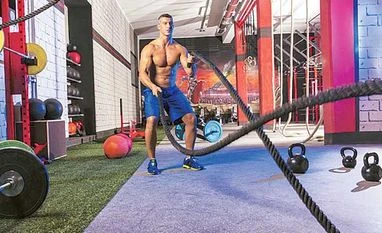 "BCAA supplements are just hype - here's a better way to build muscles")
premium
WebinarsNew
Explore Business Standard
Do these products work - or are there better ways to help you get the most out of your gym membership?
As gym regulars we never cease to be amazed at the array of post-workout concoctions people consume in the changing room. We see everything from pills and powders to a rainbow of luminous drinks. Mostly it’s with one goal in mind, of course: to obtain muscles as close to the models endorsing these supplements as you possibly can.
The global market for sports nutrition products is predicted to hit $45 billion (£33 billion) by 2022, an increase of about 60% on 2016 value. Previously the domain of bodybuilders and elite athletes, amateur exercisers are becoming big supplement consumers thanks to the rising popularity of obstacle races, boot camps and CrossFit – all of which the product manufacturers target heavily.
One particularly popular variety is products containing branched-chain amino acids (BCAAs). These seem to promise all the benefits of boosting muscle-building after exercise with none of the hassle of foods. But do these products work – or are there better ways to help you get the most out of your gym membership?
Food vs supplements
The protein in our muscles is constantly turning over, simultaneously being broken down and built up (“synthesised”). In young healthy adults, the rate at which these two processes occur is usually the same. But to grow muscles, the rate of synthesis has to be greater than the rate of breakdown. You can do this by combining a workout of lifting weights with consuming either a foodstuff rich in protein, such as whole milk, or the isolated amino acids derived from protein.
Amino acids are the building blocks of protein and muscle. They come in 22 different varieties. A range of experiments has shown that three of these are particularly effective at activating the machinery responsible for increasing muscle protein synthesis. They are leucine, isoleucine and valine – collectively known as the BCAAs.
Supplement companies sell many products that contain just BCAAs, based on various findings about their importance, which mostly come from animal tests. Indeed, our own work suggests that leucine is particularly potent for activating the body’s protein synthesis machinery. Many people take this to mean that consuming isolated BCAAs will therefore generate a growth response as great as from an equivalent amount of food, without the additional calories or logistical problems of taking a meal to the gym.
Yet recent work from our respective research teams suggests otherwise. We know for example that you can achieve a substantial increase in protein synthesis from 20g of whole egg protein, which is around three large eggs, or from 20g of whey protein. (Though to get the maximum possible response after a full body workout, our research on whey suggests it may be necessary to consume as much as 40g.)
Under very similar lab conditions to the latter whey study, we gave a similar group of male subjects 5.6g of BCAAs following a session of lifting weights – the equivalent to 20g of whey. The resulting protein synthesis response was only about 22% – or about half what would be achieved with the equivalent dose of whey.
What would the reason for this be? Various studies suggest that to achieve a full growth response, you need a sufficient supply of the whole complement of amino acids. This seems logical: think of it like building a brick wall where 20 different bricks are required to complete the wall. The BCAAs might act like the site foreman in bringing together all the men and machinery required to build the wall. But you still can’t build the wall without the rest of the bricks, no matter how much the foreman berates the bricklayers.
In other words, following exercise you need whole protein sources that provide a high dose of BCAAs and sufficient amounts of all the other amino acids – for example meat, dairy or eggs. And not only are BCAAs less equipped to build the muscle wall, consuming them on their own potentially creates a competition with other amino acids for absorption through the intestinal wall. If so, they could be making it harder for the body to gather up the other “bricks” essential to muscle building.
Window dressing
Besides building muscle, people also consume BCAAs (and other supplements) to allow them to hit the so-called anabolic window – the period of time available post-workout, often said to be between 30 minutes and two hours, in which to consume protein/amino acids to get the benefits of muscle building.
Our work indicates that the timing of post-workout nutrition is not as important for building muscle as once thought, however. There is time to get home and cook a meal, possibly even as much as 48 hours, so long as it contains between 25g and 30g of high-quality protein. To maximise muscle building you should also ensure you get around 1.6g of protein per day for each kilogram of your weight (that’s about 130g for an 80kg person).
Finally, there are studies which suggest potential benefits of BCAAs when it comes to optimising body composition – maintaining muscle mass at the same time as dropping fat. Yet these have been criticised for improper statistical analysis and inconsistencies in reporting of data.
So where muscle building is the goal, we support the “food first” approach recommended by the Sports and Exercise Nutrition Register. This means sticking with foods unless you’re struggling to find time to hit the necessary protein levels – in which case, a quick whey shake may be a convenient and effective alternative.
Consuming protein-rich foods also contributes to the daily nutritional needs for a range of minerals and vitamins – something often lacking in supplements. Sticking with food will also help you avoid the risk of consuming a “banned” substance through supplementation. One study from 2007 tested 58 supplements and found that about a quarter were contaminated with banned substances.
Lee Hamilton, Lecturer in Sport, Health and Exercise Science, University of Stirling; Brad Schoenfeld, Assistant Professor, Exercise Science, City University of New York, and Kevin Tipton, Professor of Sport, Health and Exercise Sciences, University of Stirling
This article was originally published on The Conversation. Read the original article.
Already subscribed? Log in
Subscribe to read the full story →

3 Months
₹300/Month
1 Year
₹225/Month
2 Years
₹162/Month
Renews automatically, cancel anytime

Over 30 premium stories daily, handpicked by our editors


News, Games, Cooking, Audio, Wirecutter & The Athletic
Digital replica of our daily newspaper — with options to read, save, and share


Insights on markets, finance, politics, tech, and more delivered to your inbox
In-depth market analysis & insights with access to The Smart Investor


Repository of articles and publications dating back to 1997
Uninterrupted reading experience with no advertisements


Access Business Standard across devices — mobile, tablet, or PC, via web or app
First Published: Sep 27 2017 | 10:08 AM IST


