
Successful multiple satellite launch: Isro puts Cartosat into orbit for earth observation
The whole mission got over in around 23 minutes.
 "Successful multiple satellite launch: Isro puts Cartosat into orbit for earth observation")
WebinarsNew
Deep DiveNew
Explore Business Standard
The whole mission got over in around 23 minutes.
In yet another successful multiple satellite launch mission, India on Friday successfully put into orbit its own earth observation satellite Cartosat, nano satellite NIUSAT and 29 foreign satellites from 14 countries.
The rocket Polar Satellite Launch Vehicle's (PSLV) main cargo was India's 712 kg Cartosat-2 series satellite for earth observation with a design life of five years.
This satellite is similar to the earlier Cartosat-2 series.
The other 30 satellites weighing 243 kg were from 14 countries - Austria, Belgium, Britain, Chile, Czech Republic, Finland, France, Germany, Italy, Japan, Latvia, Lithuania, Slovakia, and the US- as well as one Indian nano satellite, NIUSAT.
The whole mission got over in around 23 minutes.
According to ISRO, the images sent by Cartosat satellite would be useful for cartographic, urban, rural, coastal land use, utility management like road network monitoring, water distribution, creation of land use maps, change detection to bring out geographical and man-made features and various other land information systems and geographical information system applications.
One of the 30 co-passenger satellites is the Indian nano satellite 15 kg NIUSAT belonging to Nooral Islam University, Tamil Nadu.
The satellite will provide multi-spectral imagery for agricultural crop monitoring and disaster management support applications.
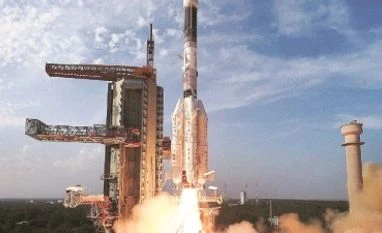
Exactly at 9.29 a.m. the PSLV rocket standing 44.4 metres tall and weighing 320 ton tore into the morning skies with fierce orange flames at its tail.
Gathering speed every second the rocket raced towards the heavens amidst the cheers of the ISRO officials and the media team assembled at the rocket port here.
The PSLV rocket is a four stage/engine rocket powered by solid and liquid fuel alternatively.
At the rocket mission control room Indian space scientists at ISRO were glued to their computer screens watching the rocket escaping the earth's gravitational pull.
Just over 16 minutes into the flight the PSLV rocket ejected Cartosat at an altitude of around 510 km.
It was followed by NIUSAT and the 29 foreign satellites.
(Venkatachari Jagannathan can be contacted at v.jagannathan@ians.in)
--IANS
vj/in
First Published: Jun 23 2017 | 10:52 AM IST


 Connect with us on WhatsApp