
Finance ministry agrees to customs duty proposal on solar modules: MNRE
The Ministry of New & Renewable Energy (MNRE) has said that the finance ministry has agreed to its proposal to impose basic custom duty (BCD) of 40 per cent on solar modules
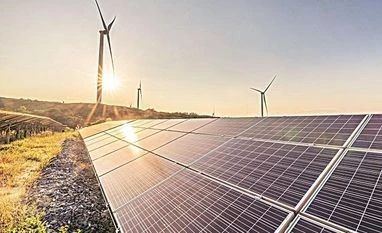 "Finance ministry agrees to customs duty proposal on solar modules: MNRE")
WebinarsNew
Deep DiveNew
Explore Business Standard
The Ministry of New & Renewable Energy (MNRE) has said that the finance ministry has agreed to its proposal to impose basic custom duty (BCD) of 40 per cent on solar modules
The Ministry of New & Renewable Energy (MNRE) has said that the finance ministry has agreed to its proposal to impose basic custom duty (BCD) of 40 per cent on solar modules and 20 per cent on solar cells from April 1, 2022.
An office memorandum of the MNRE said the proposal "to impose BCD on solar cells and modules (without grandfathering of bid out projects) has been agreed to by the Ministry of Finance".
According to the memorandum, the rate of BCD would be zero on solar modules as well as cells till March 31, 2022 and from April 1, 2022, the rate of BCD would be 40 per cent and 20 per cent, respectively.
The ministry has directed to inform all RE (renewable energy) implementing agencies and other stakeholders to take note of the duty rates and to include provisions in their bid documents, so that bidders take these into account while quoting tariffs, in all bids where the last date of bid submission is subsequent to (issue of) this memorandum.
It also stated that in all such bids, the imposition of BCD as per the trajectory shall not be considered as change in law.
This assumes significance in view of India's ambitious target of 175 GW of installed renewable energy (RE) capacity, including 100 GW of solar power, by 2022. India has also set a target of 450 GW installed RE capacity by 2030.
Presently, India's solar sector, just like in any other country of the world, is heavily reliant on imports of solar equipment, the ministry noted in memorandum.
The government has also noted instances of certain countries dumping solar cells and modules to kill the nascent domestic industry, because of which the government had to impose Safeguard Duties, it added.
The COVID-19 pandemic brought disruptions in international trade including imports of solar modules and solar cells affecting solar capacity additions in the country, it said adding that considering India's huge solar targets and that electricity is a strategic sector of the economy, India needs to develop domestic solar manufacturing capacities and reduce its dependence on imports to avoid disruption in future.
The Aatmanirbhar Bharat initiative has geared up the country toward scaling up domestic manufacturing, the document said.
Scaling up of domestic solar manufacturing would also enable India to export solar cells/modules, the ministry stated adding that this would also provide other countries an alternative avenue for procuring solar cells/modules, it added.
(Only the headline and picture of this report may have been reworked by the Business Standard staff; the rest of the content is auto-generated from a syndicated feed.)
First Published: Mar 10 2021 | 7:40 PM IST


 Connect with us on WhatsApp