India has scaled back expenditure, including on productive assets that aid economic growth, as the government is confronted with the risk of its budget deficit blowing out.
Capital expenditure -- the money spent on creating, maintaining, or improving fixed assets like roads and factories -- stood at 40% of the budgeted amount in the six months to September, down from 55.5% in the year-ago period, data from the government’s Controller General of Accounts show. The overall spending during the period was 49% of the budget aim compared to 53% last year.
That’s despite Prime Minister Narendra Modi’s government outlining measures worth more than 21 trillion rupees ($281 billion) to counter the economic and social fallout of the Covid-19 outbreak. A closer look at the numbers show the bulk of the spending was directed toward the poor and the farmers, with crucial sectors such as coal, power, shipping and steel receiving less than a third of their annual budget allocation.
“Capital expenditure is something the government shouldn’t neglect,” said Sabyasachi Kar, professor at the RBI chair at the National Institute of Public Finance and Policy in New Delhi. “If that is not happening then that is a problem for the economy.”
Spending on capital assets has so far trailed the so-called revenue expenditure that includes interest payments and overheads such as salaries, the data released last week showed. Modi’s government placed spending curbs on some ministries from April through December to manage its cash flow.
What Bloomberg Economics Says
Economists surveyed by Bloomberg predict a blow out in the fiscal gap to more than double the budgeted 3.5% of gross domestic product in the year to March. That slippage is mostly on account of falling revenues due to subdued economic activity than due to increased borrowing to support growth recovery.
A paper by the Reserve Bank of India in the aftermath of the 2008 global financial crisis showed that every rupee spent on capital assets returned 1.29 rupees while the multiplier on revenue expenditure was only 0.37 in the short-run.
India needs to spend the budgeted amount for different ministries, “and that can provide a meaningful growth stimulus”, Citigroup Inc. economists Samiran Chakraborty and Baqar Zaidi wrote in a Nov. 1 report to clients. They favored spending on infrastructure, rather than populist measures, to cushion the economy headed for the deepest slump among emerging nations this financial year.

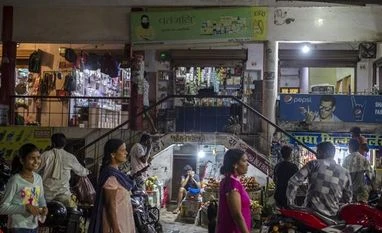 "Higher budget deficit looms as govt cuts spending on growth drivers")












 Connect with us on WhatsApp