Higher public investment to stimulate demand, generate jobs: DEA Secretary
The Budget proposals seek to stimulate the economy by stepping up public investments, which will create demand for industrial inputs and generate jobs, Economic Affairs Secretary Ajay Seth said.
Press Trust of India New Delhi The Budget proposals seek to stimulate the economy by stepping up public investments, which will create demand for industrial inputs like cement, steel and capital goods, and generate jobs, Economic Affairs Secretary Ajay Seth said.
Finance Minister Nirmala Sithaharaman in her Budget 2022-23 hiked public investment by as much as 35.4 per cent to Rs 7.5 lakh crore or 2.9 per cent of the GDP.
Observing that direct support measures have only limited multiplier effect, Seth said steps which can have long to medium term impact are needed to boost the economy in a sustained manner.
"When we are looking at economic management, it is not a one year affair. One has to look at short, medium or long term. In the short term, what was needed has been provided.
"When we come to the medium and long term, we find that a direct income support that simulates consumption demand has a very limited multiplier effect, whereas capital investment has a much larger, very strong multiplier effect, which lasts more than one year.
"How it helps? It generates demand for the inputs which get into the investment -- cement, steel, capital goods, construction machinery and so on," Seth told PTI in an interview.
In view of the hardship caused by the COVID-19 pandemic, the government provided direct support to people through various schemes like Jan Dhan, PM KISAN and Pradhan Mantri Garib Kalyan Yojana, he said, adding "in year two the need moderated and year three we expect that the need may not be there."
By increasing public investment, the government has provided the signal that it is ready to pump funds into growth-oriented activities.
"It gives confidence to the people about the future and a lot of consumption behaviour gets influenced not by income of today but gets impacted also by what are the expectations of future," he noted.
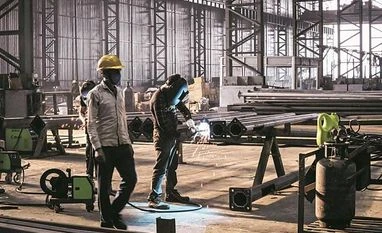
Secondly, Seth added, the initiatives will facilitate crowding in of private investments and generate jobs for factory workers, skilled, semi-skilled and unskilled persons.
This is how crowding in of private investment happens, he said, adding that in 2019 when corporate tax was brought down, the investment could not take place because of the pandemic but thereafter conditions are ripe for them to invest.
The government in September 2019 slashed corporate tax rate for companies that do not avail of any tax incentive to 22 per cent. New manufacturing companies have to pay an even lower corporate tax rate of 15 per cent.
The Budget 2022-23, presented by Finance Minister on Tuesday, extended the concessional rate of 15 per cent for one more year till March 2024 for newly incorporated manufacturing companies.
Infra spending has a multiplier effect on the economy. This means that not only does the project contribute immediately through increased demand for labour and construction materials but also through the second order effects in terms of improved connectivity.
Various studies have estimated the multiplier to be between 2.5-3.5 times. So for every rupee spent by the government in creating infrastructure, GDP gains are worth Rs 2.5-3.5.
According to NITI Aayog, in times of economic contractions, this multiplier is larger than the one during economic expansion. This implies that public investment, if timed and targeted right, can actually 'crowd-in' private investment rather than 'crowd-out' such funds.
(Only the headline and picture of this report may have been reworked by the Business Standard staff; the rest of the content is auto-generated from a syndicated feed.)

 "Higher public investment to stimulate demand, generate jobs: DEA Secretary")


