Hindu rate of growth: Where does the term come from and what it means

The term was first used by the late economist Raj Krishna in 1978 to refer to the low rate of economic growth in the pre-liberalisation era
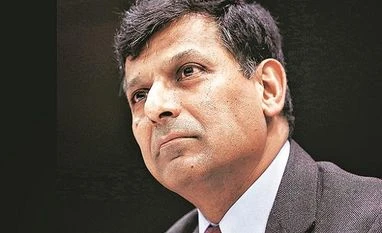
Raghuram Rajan
Raghav Aggarwal New Delhi
2 min read Last Updated : Mar 06 2023 | 3:39 PM IST
Former Reserve Bank of India (RBI) Governor Raghuram Rajan on Sunday said that India is "dangerously close" to the Hindu rate of growth due to subdued private sector investment, high-interest rates and slowing global growth.

Rajan said that the slowing sequential quarterly growth was "worrying".

What is the 'Hindu rate of growth'?

The Hindu rate of growth is a term used to describe India's low rate of economic growth for a prolonged period. It is generally used to show that the country is satisfied with the slow growth rate.

The term was first used by the late economist Raj Krishna in 1978 to refer to the low rate of economic growth in the pre-liberalisation era. Krishna explained it against the backdrop of socialist economic policies. He also used to teach at the Delhi School of Economics (DSE).

It must be noted that the slow growth rate is called the Hindu rate of growth only if it is persistent and is accompanied by low per-capita GDP, with population growth factored in.

The most recent example of this is the 1980s, just before PV Narasimha Rao's economic reforms. India's annual population growth rate was over 2 per cent, and the per-capita GDP growth rate, with 3.5 per cent GDP growth, was a meagre 1 per cent.

According to Krishna, this was due to the socialist policies of state control and import substitution. It is also said that in one of his lectures, Krishna said that "no matter what happens to the economy, the trend growth rate in India will be 3.5 per cent."

That changed when liberalisation, privatisation and globalisation (LPG) reforms were initiated in 1991 when India faced a balance of payments crisis.

Why the term 'Hindu'?

According to reports, several economists believed that the term "Hindu" was used to link the belief in Karma and Bhagya with the slow growth. However, later liberal economists and historians like Paul Bairoch rejected this connection and instead attributed the low growth rate to the then governments' protectionist and interventionist policies.

One subscription. Two world-class reads.

Already subscribed? Log in

Subscribe to read the full story →
*Subscribe to Business Standard digital and get complimentary access to The New York Times

Smart Quarterly

₹900

3 Months

₹300/Month

SAVE 25%

Smart Essential

₹2,700

1 Year

₹225/Month

SAVE 46%
*Complimentary New York Times access for the 2nd year will be given after 12 months

Super Saver

₹3,900

2 Years

₹162/Month

Subscribe

Renews automatically, cancel anytime

Here’s what’s included in our digital subscription plans

Exclusive premium stories online

  • Over 30 premium stories daily, handpicked by our editors

Complimentary Access to The New York Times

  • News, Games, Cooking, Audio, Wirecutter & The Athletic

Business Standard Epaper

  • Digital replica of our daily newspaper — with options to read, save, and share

Curated Newsletters

  • Insights on markets, finance, politics, tech, and more delivered to your inbox

Market Analysis & Investment Insights

  • In-depth market analysis & insights with access to The Smart Investor

Archives

  • Repository of articles and publications dating back to 1997

Ad-free Reading

  • Uninterrupted reading experience with no advertisements

Seamless Access Across All Devices

  • Access Business Standard across devices — mobile, tablet, or PC, via web or app

Topics :Raghuram RajanGDP growthIndia GDP growthPV Narasimha RaoEconomic reforms 1991BS Web Reports

Next Story



