The Reserve Bank of India (RBI) has been prudent in exchange rate management and not allowed a free fall of the rupee, said Deepak Parekh, chairman of HDFC Ltd, on Tuesday as he insisted there was no need to ring a "warning alarm" about the economy.
The rupee has marked its longest weakening streak since 1985, as per reports. The dollar index, which measures the greenback against a basket of currencies, has risen by 16 per cent year to date while the rupee has depreciated around 10 per cent, Yen by 23 per cent, Pound by 16 per cent, and Yuan by 15 per cent.
The rupee and other major Asian have weakened ahead of the US Federal Reserve’s rate decision this week.
“No doubt, the impact of the dollar strength has been harsher for emerging markets. The dollar strength triggers the risks of taper tantrums and sudden large outflows of capital can have a destabilising effect on trade and finance,” said Parekh at the Indian Chamber of Commerce’s annual event.
Forex reserves of many countries have shrunk as central banks defend their currencies against volatility. India’s forex reserves have declined to $524.52 billion, the lowest since July 2020. The drop in reserves is largely attributed to the RBI’s intervention in the currency market to support the rupee.
“Our import cover currently stands at 9 months compared to 15 months earlier. In 2013, at the time of the taper tantrum, India had an import cover of 6.5 months. In 1991, India had forex reserves just for 15 days. Fortunately, the present situation does not warrant a warning alarm,” Parekh said.
Parekh said the challenge for central banks around the globe is to strike a balance between front-loading interest rate hikes to curb inflation while ensuring such action does not hurt economic growth. “Central banks have a tough role ahead as they try to avoid a hard landing. It’s a case of ‘damned if they do, damned if they don’t’,” he said.
India’s macro fundamentals are strong despite the growing pressure on the current account deficit and a gloomy global environment. India has no dearth of investment opportunity, as its consumer credit to GDP ratio stands at 37 per cent, among the lowest for any large economy. The mortgage to GDP ratio is at 11 per cent; insurance penetration is at 4.2 per cent; and mutual penetration is at 17 per cent.
Parekh said India needs more savers. “The gap between deposit and credit growth has widened sharply with year-on-year deposit growth lagging at 9 per cent. Long-term savers are needed for long-term investments.” The government must legally protect from its own vigilance agencies those involved in disinvestment transactions, push power reforms and strengthen legal frameworks to ensure that payment dues are honoured in time.

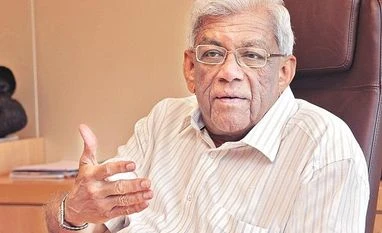 "RBI has been prudent in its exchange rate management: Deepak Parekh")












 Connect with us on WhatsApp