RBI issues guidelines for appointment of statutory auditors of banks, NBFCs
The Reserve Bank of India on Tuesday issued guidelines for appointment of statutory auditors of banks and non-banking finance companies (NBFCs), including housing finance companies
Press Trust of India Mumbai The Reserve Bank of India on Tuesday issued guidelines for appointment of statutory auditors of banks and non-banking finance companies (NBFCs), including housing finance companies.
'Guidelines for Appointment of Statutory Central Auditors (SCAs)/ Statutory Auditors (SAs) of Commercial Banks (excluding RRBs), UCBs and NBFCs (including HFCs)' will be applicable for financial year 2021-22 and onwards.
However, non-deposit taking NBFCs with asset size below Rs 1,000 crore have the option to continue with their extant procedure.
The guidelines provide necessary instructions for appointment of SCAs/SAs, the number of auditors, their eligibility criteria, tenure and rotation, etc. while ensuring the independence of auditors, the Reserve Bank said.
As the guidelines are being implemented for the first time for Urban Co-operative Banks (UCBs) and NBFCs from 2021-22, "they shall have the flexibility to adopt these guidelines from the second half of FY 2021-22, in order to ensure that there is no disruption".
Banks and UCBs will be required to take prior approval of Reserve Bank of India (RBI) for appointment/reappointment of SCAs/SAs, on an annual basis, the guidelines said.
For entities with an asset size of Rs 15,000 crore and above as at the end of previous year, statutory audit should be conducted under joint audit of a minimum of two audit firms. All other entities should appoint a minimum of one audit firm for conducting statutory audit.
"It shall be ensured that joint auditors of the entity do not have any common partners and they are not under the same network of audit firms. Further, the entity may finalise the work allocation among SCAs/SAs, before the commencement of the statutory audit, in consultation with their SCAs/SAs," it said.
The guidelines further said that in order to protect the independence of the auditors/audit firms, entities will have to appoint the SCAs/SAs for a continuous period of three years, subject to the firms satisfying the eligibility norms each year.
(Only the headline and picture of this report may have been reworked by the Business Standard staff; the rest of the content is auto-generated from a syndicated feed.)

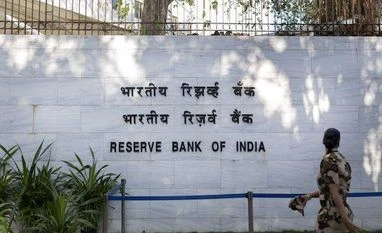 "RBI issues guidelines for appointment of statutory auditors of banks, NBFCs")


 Connect with us on WhatsApp