Indian Railways may miss 6,000-km electrification target for this year

Indian Railways has achieved 62% of its 6,000-km target this fiscal year
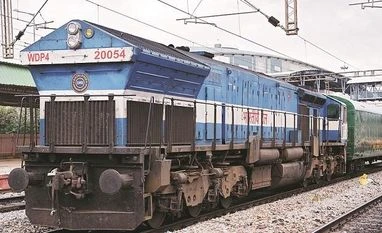
Indian railways, train
The government has recently come out with a road map to electrify 28,000 km in the next three financial years
Shine Jacob New Delhi
3 min read Last Updated : Mar 21 2019 | 10:12 PM IST
The Indian Railways may fall short of its electrification target of 6,000 kilometres for the 2018-19 financial year. As on March 18, the national transporter has completed electrification of 3,754 km, 8 per cent short of the 4,087 km achieved in 2017-18. 

To achieve the remaining 2,246 km in 13 days, the railways will have to do the work on 173 km on an average every day, a near-impossible task, given the average per day in 2018-19 has been 10.7 km so far. Even to achieve last year’s numbers, the railways will have to increase the pace of electrification to 26 km for each of the 13 days remaining this fiscal year. The average rate of railway electrification was around 11 km a day in the previous financial year. 

“The speed of electrification is likely to increase from March 22 (post-Holi) and we are confident to surpass last year’s numbers,” said an official. 

Falling short of the ambitious target may dampen prospects of the railways’ aim of achieving 100 per cent electrification of its broad gauge routes by 2022. 

The government has recently come out with a road map to electrify 28,000 km in the next three financial years. This includes 7,000 km in 2019-20 and 10,500 km each in 2020-21 and 2021-22.

Electrification work in 30,212 km — about 44.85 per cent of the country’s 67,368-km railway network — was completed till March last year. 

At the time of Independence, the country had only 388 km of electrified rail network. In the last few years, the Indian Railways managed to accelerate the speed of electrification, increasing it from adding 610 km in 2013-14 to about 1,176 km in 2014-15, 1,502 km in 2015-16. There was a 148 per cent increase from 1,646 km in 2016-17 to 4,087 km in 2017-18. 
 

Officials said electrifying 4,000 km will be a big achievement in a year, if one looks at the previous numbers. Once the current electrification drive is complete, it is expected to save the railways at least Rs 13,000 crore in fuel bill. Moreover, according to an internal railway estimate, the move may create 550,000 man-years of jobs during the execution period. 

To speed up the electrification drive, the railways had given contracts to public sector undertakings like RITES, Ircon and Power Grid Corporation (PGCIL). According to media reports, the power requirement for broad gauge route is likely to increase from 2,000 Mw to 3,400 Mw, excluding the requirement for the two dedicated freight corridors.

One subscription. Two world-class reads.

Already subscribed? Log in

Subscribe to read the full story →
*Subscribe to Business Standard digital and get complimentary access to The New York Times

Smart Quarterly

₹900

3 Months

₹300/Month

SAVE 25%

Smart Essential

₹2,700

1 Year

₹225/Month

SAVE 46%
*Complimentary New York Times access for the 2nd year will be given after 12 months

Super Saver

₹3,900

2 Years

₹162/Month

Subscribe

Renews automatically, cancel anytime

Here’s what’s included in our digital subscription plans

Exclusive premium stories online

  • Over 30 premium stories daily, handpicked by our editors

Complimentary Access to The New York Times

  • News, Games, Cooking, Audio, Wirecutter & The Athletic

Business Standard Epaper

  • Digital replica of our daily newspaper — with options to read, save, and share

Curated Newsletters

  • Insights on markets, finance, politics, tech, and more delivered to your inbox

Market Analysis & Investment Insights

  • In-depth market analysis & insights with access to The Smart Investor

Archives

  • Repository of articles and publications dating back to 1997

Ad-free Reading

  • Uninterrupted reading experience with no advertisements

Seamless Access Across All Devices

  • Access Business Standard across devices — mobile, tablet, or PC, via web or app

Next Story



