Over the past 15 years, social media penetration has altered the norms of political campaigning. The skilful propagation of fake news and hate campaigns through Facebook, Instagram and WhatsApp are part and parcel of modern life.
Facebook (that owns Instagram and WhatsApp, which are as dominant in their respective spheres) is one of the world’s two most preferred sources for news content (the other being Google). Facebook’s revenues depend on engagement and its algorithms are designed to generate more and more engagement.
Human nature being what it is, users are more engaged by content that amplifies their personal prejudices, and makes them angry. Few possess either the inclination or ability to check content for authenticity. So, the algorithms offer more and more in the way of horrific content culled from dubious sources, as documented in Facebook’s own research.
A succession of whistle-blowers has revealed how this propensity has been gamed. The first big scandals involved the successful use of Facebook and data culled from it during the Brexit campaign and the Donald Trump Presidential campaign of 2016.
The latest pair of whistle-blowers, data-scientists Frances Haugen and Sophie Zhang, have both separately released internal documents showing how this has vitiated India’s politics. Their testimony shows how Facebook has been careless as well as selective in its moderation efforts, vis-a-vis its largest user base of 350 million Indians.
For instance, a test account purporting to be an Indian woman was set up by Facebook in the lead-in to the Delhi Assembly elections of 2019. This news feed was overwhelmed by “polarising nationalistic content, misinformation, fake news and gore”.
Haugen also released reports that pointed to Rashtriya Swayamsevak Sangh (RSS) setting up Hindutva groups using multiple fake ids run by single individuals. Zhang has revealed how fake accounts run by an unnamed Bharatiya Janata Party MP were not removed, whereas similar fake accounts run by the Aam Aadmi Party and Congress were deleted.
Now, apart from initiating damage control, Facebook may be launching a massive rebranding exercise. There are confirmed rumours, if one might indulge in an oxymoron, Facebook is going to rebrand itself to be something more than a social media giant. Several news reports indicate that it will do an “Alphabet” a la Google as early as next week. A new name has apparently been chosen but it’s said to be a closely-held secret to be revealed at FB’s annual corporate shindig, Connect, on October 28.
In 2015, Google created the holding company, Alphabet, which became the parent of Google (search, email, android, and allied stuff), Waymo (autonomous cars), Fitbit (health), DeepMind (artificial intelligence) and a host of other subsidiaries in different areas. This wasn’t just a restructuring — it was an effort to change the group’s image.
Facebook is currently seen as a pure–play social media group. While WhatsApp, Facebook and Instagram are dominant, all three have received bad press. Instagram has contributed to depression and suicidal thoughts in young adults, according to internal studies leaked by Haugen. WhatsApp has been at the centre-stage of multiple hate campaigns. It is a preferred channel for coordinating riots, spreading hate content, and also doing drug deals, if one goes by the Narcotics Control Bureau’s (NCB’s) high-profile investigations of Bollywood.
Onavo, which is also a key Facebook property, has been accused of being spyware. It is at the centre of a case by the Australian Competition Commission for "false, misleading or deceptive conduct" by using personal data "for its own commercial purposes".
All this negative publicity has meant erosion of trust. Surveys in 2020 and 2021 show more people distrust Facebook and/or dislike the way in which it conducts business than earlier. (This trend of rising mistrust is also evident in other digital players like Apple, Google, Twitter and TikTok).
There are high chances legislators in multiple nations will insist on more stringent moderation standards. Regulators may also look closely at the possible abuse of monopoly power. In December 2020, the US Federal Trade Commission (FTC) and 46 US states sued Facebook, accusing the firm of buying up competitors — such as WhatsApp and Instagram — to liquidate competition. The FTC antitrust lawsuit was thrown out, but a revised version was filed in August 2021.
So, Facebook also does many other things and it would like to focus the attention of consumers on those things, while avoiding as much bad publicity as it possibly can, in the social media domain.
For instance, Facebook also owns Oculus VR, which is at the cutting-edge of virtual reality hardware and digital gaming environments.
It is trying to put together a gaming development and VR platform, Horizon, on the lines of the highly successful Roblox, which is patronised mostly by young adults and uses a revenue-share model. Earlier called “Facebook Horizon”, it has been renamed, notably, to simply “Horizon”. Facebook is also struggling to set up a consortium to launch a dollar-backed cryptocurrency.
Neal Stephenson’s 1992 prophetic science fiction classic, Snow Crash, was published the year before Tim Berners-Lee wrote HTML and laid the foundations of the Web. In Snow Crash, Earth is a completely digitised planet, with nation-states superseded by corporations. Everybody lives in the “metaverse”, a word Stephenson coined to describe a melding of physical space, augmented reality and virtual reality. The book is a rollicking ride through cyberpunk, pizza delivery and Sumerian mythology.
Mark Zuckerberg has repeatedly used the M word in his more recent public utterances. In mid-2021, he said, “The Metaverse is going to be the next big chapter for us.” The question is: Can virtual reality along with a name change help to clean up Facebook’s tainted social media image?

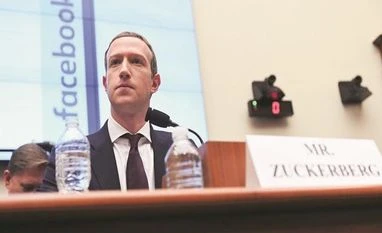 "Alternate reality? Facebook plans to launch massive rebranding exercise")












 Connect with us on WhatsApp