The leaders of Azerbaijan and Armenia agreed in a Brussels meeting on Sunday to work further on a peace plan for Nagorno-Karabakh that has stoked a wave of protests in Yerevan over opposition claims that Pashinyan is being too soft.
European Council President Charles Michel held bilateral talks with both Azerbaijani President Ilham Aliyev and Armenian Prime Minister Nikol Pashinyan before they had a trilateral at which Karabakh was discussed.
"The leaders agreed to advance discussions on the future peace treaty governing inter-state relations between Armenia and Azerbaijan," Michel said in a statement after the meeting, adding that foreign ministers will meet "in the coming weeks." A commission on border delimitation and border security will start work in "the coming days," with Aliyev and Pashinyan agreeing also on the need to proceed with unblocking transport links between the two countries.
A simmering dispute over Nagorno-Karabakh between Armenia and Azerbaijan flared into a six-week war in 2020.
Azeri troops drove ethnic Armenian forces out of swathes of territory they had controlled since the 1990s in and around Nagorno-Karabakh before Russia brokered a ceasefire.
Baku said Aliyev told Michel "that Azerbaijan had laid out five principles based on international law for the normalization of relations between Armenia and Azerbaijan and for the signing of a peace agreement."
Armenia's Pashinyan discussed with Michel the situation around Nagorno-Karabakh, humanitarian issues and stressed the need to resolve them, the Armenian prime minister's office said.
But Pashinyan is under pressure at home from opponents who say he mishandled the 2020 war and claim his recent public statements indicate he is giving up too much to Azerbaijan.
Pashinyan has faced a series of protests over recent weeks in Yerevan since he said the international community wanted Armenia to "lower the bar" on its claims to Nagorno-Karabakh.
The unrest also coincides with Russia's war in Ukraine, which has prompted many former Soviet neighbours to reassess their own security just as Moscow is preoccupied with the biggest confrontation with the West for generations.
Michel said that another trilateral meeting will be held by July or August.
(Writing by Guy Faulconbridge in London and Lidia Kelly in Melbourne; Editing by Kirsten Donovan and Michael Perry)

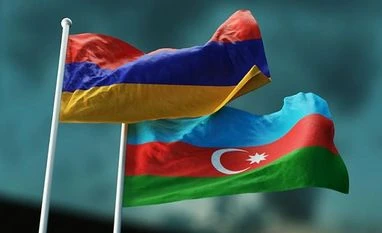 "Azeri and Armenian leaders agree on peace plan for Nagorno-Karabakh")











