
Brent crude set for biggest monthly gain in 7 years despite glut
But others warned that the rally was happening too soon, and driven in large part by investors taking speculative positions in oil
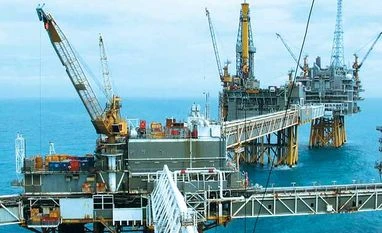 "Brent crude set for biggest monthly gain in 7 years despite glut")
WebinarsNew
Deep DiveNew
Explore Business Standard
But others warned that the rally was happening too soon, and driven in large part by investors taking speculative positions in oil
Brent crude was heading for its biggest monthly rise in seven years on Friday, touching fresh 2016 highs as a weak dollar and falling US production tempered concerns about a lingering excess of physical oil.
Recent gains have given analysts reason to become more bullish on oil price forecasts, with those polled by Reuters raising their price expectations for the second month in a row after a two-year price rout.
A looming rise in Middle East output capped gains, but investor sentiment held the optimism that has helped lift oil futures nearly 80% higher than January lows.
Brent futures were trading at $48.26 a barrel at 1211 GMT, up 12 cents from their last close. US crude was up 42 cents at $46.45 a barrel, with both contracts hitting 2016 highs earlier in the session.
Investment bank Jefferies on Friday said the market "is coming into better balance" and would flip into undersupply in the second half of the year.
But others warned that the rally was happening too soon, and driven in large part by investors taking speculative positions in oil.
"The issue is that we haven't seen price rallies ... correlate with fundamentals," said Hamza Khan, senior commodity strategist at ING. "The fundamentals - high stocks, high production - haven't changed."
Deutsche Bank said a looming rise in production by the Organization of the Petroleum Exporting Countries - due to climbing Iranian output and following outages in Iraq, Nigeria and the United Arab Emirates - could cap recent price rises.
Additionally, Saudi output is expected to edge up by 350,000 barrels to around 10.5 million barrels per day, sources told Reuters, just as tankers filled with unsold oil are at sea seeking buyers.
Still, falling production outside OPEC, notably in the United States, has raised hopes that the worst of the nearly two-year excess of oil was over.
Analysts polled by Reuters raised their average forecast for Brent crude futures in 2016 to $42.30 a barrel, compared with $40.90 last month.
Bank of America Merrill Lynch said in a note that "non-OPEC oil supply is indeed hanging off a cliff", and estimated that global output would contract year on year in April or May for the first time since 2013.
A weakening dollar, which has fallen 6% this year against a basket of other leading currencies, helped support oil, as it makes dollar-priced crude cheaper for holders of other currencies.
There are also growing risks that production in OPEC member Venezuela could decline. Risk consultancy Eurasia Group said the state was running out of cash to keep its oil pumps running.
"Mounting problems will probably lead to a decline of 100,000-150,000 bpd this year," Eurasia Group said.
First Published: Apr 29 2016 | 7:27 PM IST


 Connect with us on WhatsApp