Don't restrict movement of labour: PM tells G20

He also emphasised on skill development in emerging economies, especially India, in order to benefit the youth population
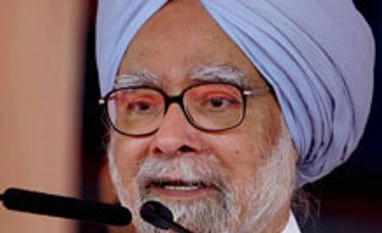
Manmohan Singh
IANS St. Petersburg
Last Updated : Sep 06 2013 | 5:29 PM IST
Indian Prime Minister Manmohan Singh said on Friday the movement of labour should be free across nations without restrictions as it can otherwise stifle growth.
 
In a short intervention at the second working session of the G20 Summit here, the prime minister also emphasised on skill development in emerging economies, especially India, so that its large youth population can benefit from growth.
 
"International labour mobility in high end skills has become an important aspect of global integration across countries," the prime minister said.
 

Also Read

"Pending the evolution of international agreements in this area, we must do whatever we can to avoid new restrictive measures, which can stifle a sector that can contribute to global growth in the years ahead," he said.
 
Manmohan Singh said his government was pursuing a massive skills development programme to ensure that young people get gainful employment so that they can both contribute to, and benefit from, economic growth.
 
The government has launched a national skilling mission under which a target has been fixed to train 500 million people by 2022.
 
Of this 150 million will be skilled by the private sector under the National Skill Development Corporation (NSDC), the rest 350 million will be skilled by different government agencies and departments.
 
Manmohan Singh asked the rich nations to show innovativeness in devising
 
"unconventional development financing" in line with the "unconventional monetary policy" adopted after the 2008 economic crisis.
 
"Industrialised countries have shown that unconventional monetary policy can be used to great effect. We need to show the same innovativeness in devising unconventional development financing also," he said.
 
The prime minister suggested that the World Bank and the Asian Development Bank could create a special window for financing infrastructure development, including for ongoing projects that face a sudden scarcity of funds owing to volatile capital flows.
 
"The aim should be to create flexible mechanisms which not only maintain the flow of infrastructure financing at times when other investments are slowing down, but actually expand such investments to play a counter cyclical role," he said.
 

*Subscribe to Business Standard digital and get complimentary access to The New York Times

Smart Quarterly

₹900

3 Months

₹300/Month

SAVE 25%

Smart Essential

₹2,700

1 Year

₹225/Month

SAVE 46%
*Complimentary New York Times access for the 2nd year will be given after 12 months

Super Saver

₹3,900

2 Years

₹162/Month

Subscribe

Renews automatically, cancel anytime

Here’s what’s included in our digital subscription plans

Exclusive premium stories online

  • Over 30 premium stories daily, handpicked by our editors

Complimentary Access to The New York Times

  • News, Games, Cooking, Audio, Wirecutter & The Athletic

Business Standard Epaper

  • Digital replica of our daily newspaper — with options to read, save, and share

Curated Newsletters

  • Insights on markets, finance, politics, tech, and more delivered to your inbox

Market Analysis & Investment Insights

  • In-depth market analysis & insights with access to The Smart Investor

Archives

  • Repository of articles and publications dating back to 1997

Ad-free Reading

  • Uninterrupted reading experience with no advertisements

Seamless Access Across All Devices

  • Access Business Standard across devices — mobile, tablet, or PC, via web or app

More From This Section

First Published: Sep 06 2013 | 4:59 PM IST

Next Story