Home / World News / Norwegian Airlines sets record for fastest transatlantic flight
Norwegian Airlines sets record for fastest transatlantic flight
The time is nothing compared to what was possible on the Concorde, the sky-high-priced supersonic plane that could cross the Atlantic in a sprightly 3.5 hours and ceased operation in 2003
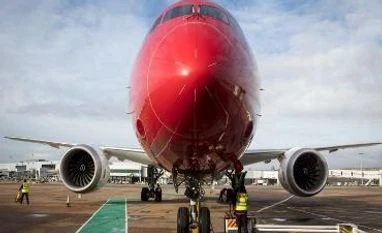
To the envy of plane-weary travelers everywhere, passengers aboard a Norwegian Airlines flight from New York to London on January 15 were treated to a pleasant surprise: They arrived 53 minutes ahead of schedule, making theirs the fastest transatlantic flight ever recorded on a subsonic commercial aircraft. The final flight time: five hours and 13 minutes.
The good time came thanks to better-than-expected weather conditions and a hefty tailwind, which helped the Boeing 787-9 Dreamliner gain three minutes over the previous record, held by a 2015 British Airways route that spanned five hours and 16 minutes. Still, the Norwegian flight’s captain said an even-faster time may be in the cards.
“We were actually in the air for just over five hours, and if it had not been for forecasted turbulence at lower altitude, we could have flown even faster,” said Captain Harold van Dam at Norwegian in a statement.
The time is nothing compared to what was possible on the Concorde, the sky-high-priced supersonic plane that could cross the Atlantic in a sprightly 3.5 hours and ceased operation in 2003. Supersonic air travel, while faster, is fairly controversial: It can create such unpleasant ground-level disturbances as shattered windows, cracked plaster and very confused farm animals. For this reason, supersonic travel has mostly been banned since 1973.
But there’s hope yet for those desperate to shave more time off their New York to London route: NASA announced in 2017 that it would accept bids for construction of a demo model for a supersonic aircraft with a low-level sonic boom.
Peter Coen, project manager for NASA’s commercial supersonic research team, told Bloomberg that growth in air travel and distances flown “will drive the demand for broadly available faster air travel,” making it possible for companies to “offer competitive products in the future.”
NASA is aiming for a sound level of 60 to 65 A-weighted decibels (dBa), which is roughly the volume of a highway-bound luxury car or background conversation in a lively restaurant.
Then again, why settle for supersonic travel when you can have hypersonic travel? Elon Musk’s proposed SpaceX Air would ostensibly fly through space at 17,000 miles per hour, potentially landing a New Yorker in Shanghai in 39 minutes flat. In September, Musk said the flight should cost no more than the current price of a full-fare economy seat in a traditional aircraft, which at the time was $2,908 from China Eastern Airlines. There are still plenty technical, logistical and business questions in the air (sorry!) on whether this would be a feasible option for the average traveler.
In the meantime, if you’re looking to speed up your next trip across the pond, your best bet is to pray for a gnarly tailwind.
Read this article for free
Register to continue reading premium journalism and analysis from Business Standard.

 "Norwegian Airlines sets record for fastest transatlantic flight")










 Connect with us on WhatsApp