Ukraine crisis: Russia may be in default, says Moody's

If Moscow is declared in default, it would mark Russia's first major default on foreign bonds since the years following the 1917 Bolshevik revolution
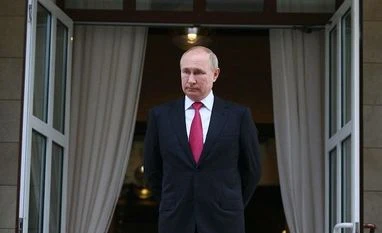
Vladimir Putin
Russia President Vladimir Putin. (Bloomberg photo)
Reuters London
3 min read Last Updated : Apr 15 2022 | 4:16 PM IST
Moody's said Russia may be in default because it tried to service its dollar bonds in roubles, which would be one of the starkest consequences to date of Moscow's exclusion from the Western financial system since President Vladimir Putin's invasion of Ukraine.

If Moscow is declared in default, it would mark Russia's first major default on foreign bonds since the years following the 1917 Bolshevik revolution, though the Kremlin says the West is forcing a default by imposing crippling sanctions.

Russia made a payment due on April 4 on two sovereign bonds - maturing in 2022 and 2042 - in roubles rather than the dollars it was mandated to pay under the terms of the securities.

Russia "therefore may be considered a default under Moody's definition if not cured by 4 May, which is the end of the grace period," Moody's said in a statement on Thursday.

"The bond contracts have no provision for repayment in any other currency other than dollars."

Moody's said that while some Russian eurobonds issued after 2018 allow payments in roubles under some conditions, those issued before 2018 - such as those maturing in 2022 and 2042 - do not.

"Moody's view is that investors did not obtain the foreign-currency contractual promise on the payment due date," Moody's said.

The Russian finance ministry did not respond to a request for comment on Friday. Finance Minister Anton Siluanov told the Izvestia newspaper earlier this month that if Russia is forced into a default, it will take legal action.

Before Putin's Feb. 24 order for what he casts as a special military operation in Ukraine, Russia was rated as investment grade. But its sovereign bonds have become a target in what the Kremlin says is an economic war waged by the United States.

Russia in 1998 defaulted on $40 billion in domestic debt and devalued the rouble under President Boris Yeltsin because it was effectively bankrupt after the Asian debt crisis and falling oil prices shook confidence in its short-term rouble debt.

In 1918 Bolshevik revolutionaries under Vladimir Lenin repudiated Tsarist debt, shocking global debt markets because Russia then had one of the world's biggest foreign debt piles.

This time, Russia has the money but can't pay because the reserves - the world's fourth largest - that Putin ordered be built up for just such a crisis are frozen by the United States, European Union, Britain and Canada.

Default
 
As Russia could not and would not borrow right now, a default would be largely symbolic, marking the tumultuous finale to its post-Cold War attempt to integrate into the West's financial architecture.

While Russia has only $40 billion in international bonds outstanding across 15 dollar or euro-denominated issues, its corporates have built up vastly more foreign debt.

The U.S. Treasury this month halted Russia's ability to use foreign currency reserves held by the Russian central bank at U.S. financial institutions to pay its debt.

The Kremlin says the West has already defaulted on its obligations to Russia by freezing its reserves, and that it wants a new system to replace the Bretton Woods financial architecture established by the Western powers in 1944.

S&P earlier this month lowered Russia's foreign currency ratings to "selective default" on increased risks that Moscow will not be able and willing to honor its commitments to foreign debtholders.

Russia's economy is heading for the worst contraction since the years following the 1991 fall of the Soviet Union, with soaring inflation and capital flight.

One subscription. Two world-class reads.

Already subscribed? Log in

Subscribe to read the full story →
*Subscribe to Business Standard digital and get complimentary access to The New York Times

Smart Quarterly

₹900

3 Months

₹300/Month

SAVE 25%

Smart Essential

₹2,700

1 Year

₹225/Month

SAVE 46%
*Complimentary New York Times access for the 2nd year will be given after 12 months

Super Saver

₹3,900

2 Years

₹162/Month

Subscribe

Renews automatically, cancel anytime

Here’s what’s included in our digital subscription plans

Exclusive premium stories online

  • Over 30 premium stories daily, handpicked by our editors

Complimentary Access to The New York Times

  • News, Games, Cooking, Audio, Wirecutter & The Athletic

Business Standard Epaper

  • Digital replica of our daily newspaper — with options to read, save, and share

Curated Newsletters

  • Insights on markets, finance, politics, tech, and more delivered to your inbox

Market Analysis & Investment Insights

  • In-depth market analysis & insights with access to The Smart Investor

Archives

  • Repository of articles and publications dating back to 1997

Ad-free Reading

  • Uninterrupted reading experience with no advertisements

Seamless Access Across All Devices

  • Access Business Standard across devices — mobile, tablet, or PC, via web or app

Topics :RussiaMoody'sRussia Ukraine ConflictUkraine

Next Story



