US FDA ends emergency use of hydroxychloroquine to treat Covid-19

The decision on the so-called 'wonder drug' as touted by the US President Donald Trump is taken in the wake of recent clinical trials
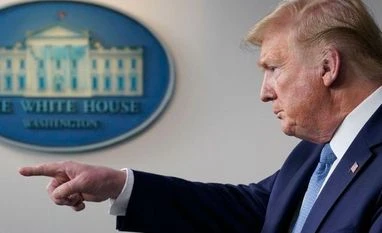
Donald trump
US President Donald Trump at The White House. AP
IANS Washington
2 min read Last Updated : Jun 16 2020 | 7:38 AM IST
The Food and Drug Administration (FDA) on Monday announced to withdraw the emergency use authorisation (EUA) for chloroquine and hydroxychloroquine (HCQ) as treatment for severe COVID-19 patients.

The decision on the so-called 'wonder drug' as touted by the US President Donald Trump is taken in the wake of recent clinical trials that showed that the antimalarial drugs were not effective against the coronavirus.

"In light of ongoing serious cardiac adverse events and other serious side effects, the known and potential benefits" of hydroxychloroquine no longer outweigh those risks, the FDA wrote on its website on Monday.

On March 28, the US FDA issued an emergency use authorisation for chloroquine and hydroxychloroquine for the treatment of Covid-19.

By April 24, however, the FDA issued a drug safety communication warning regarding hydroxychloroquine and heart rhythm disturbances that can lead to sudden cardiac death.

The drugs are traditionally used to treat malaria and certain autoimmune conditions, including lupus and rheumatoid arthritis. These can be taken to treat those conditions, but should not be taken to treat Covid-19 anymore.

After reviewing new information from large clinical trials, the FDA now believes that the suggested dosing regimens "are unlikely to produce an antiviral effect," FDA chief scientist Denise Hinton said in a letter announcing the decision, reports Politico.

Suspicions in the medical research scandal involving a little known health analytics company grew deeper after the termination of the faculty position of one of the Indian-origin co-authors of studies that were retracted by two influential peer-reviewed journals, including the one by The Lancet on the negative impact of HCQ.

The retracted Lancet study got worldwide attention after the World Health Organisation (WHO) paused trial of antimalarial drug hydroxychloroquine based on results of the study.

The study, which claimed to have analysed data from nearly 15,000 patients with Covid-19 and 81,000 controls, found that hydroxychloroquine has little benefit in treatment of the disease and instead, increases mortality in patients.

Researchers in the US earlier this month urged a temporary prohibition on prescribing chloroquine or hydroxychloroquine (HCQ), with or without azithromycin, to treat or prevent Covid-19.

One subscription. Two world-class reads.

Already subscribed? Log in

Subscribe to read the full story →
*Subscribe to Business Standard digital and get complimentary access to The New York Times

Smart Quarterly

₹900

3 Months

₹300/Month

SAVE 25%

Smart Essential

₹2,700

1 Year

₹225/Month

SAVE 46%
*Complimentary New York Times access for the 2nd year will be given after 12 months

Super Saver

₹3,900

2 Years

₹162/Month

Subscribe

Renews automatically, cancel anytime

Here’s what’s included in our digital subscription plans

Exclusive premium stories online

  • Over 30 premium stories daily, handpicked by our editors

Complimentary Access to The New York Times

  • News, Games, Cooking, Audio, Wirecutter & The Athletic

Business Standard Epaper

  • Digital replica of our daily newspaper — with options to read, save, and share

Curated Newsletters

  • Insights on markets, finance, politics, tech, and more delivered to your inbox

Market Analysis & Investment Insights

  • In-depth market analysis & insights with access to The Smart Investor

Archives

  • Repository of articles and publications dating back to 1997

Ad-free Reading

  • Uninterrupted reading experience with no advertisements

Seamless Access Across All Devices

  • Access Business Standard across devices — mobile, tablet, or PC, via web or app

Topics :CoronavirusLockdownDonald TrumpUS FDAUS Food and Drug Administration

Next Story


