From next year, professors at engineering institutions would be in for a busy summer.
A task force has suggested the faculty research with industry and take part in interactions with companies during the summer.
"We will introduce this process next year," said Devang Khakhar, director, IIT-Bombay. "Right now, the time is too short, as most faculty member would have made plans (for summer)."
To improve academia-industry interface, the task force on research, innovation and entrepreneurship suggested that 10 faculty members in each institution (100 to begin with) be selected for the summer sabbatical at companies. It has been suggested that around 1,000 courses be taught to faculty in 10-15 lectures delivered by industry representatives via video or in person.
To begin with, the premier Indian Institutes of Technology (IITs) would be part of this project.
"Interested faculty members would go into some of the areas industry is working on. It is an exposure for the faculty and allows for joint research or contributes to research, facilitating the institute and industry," Khakhar said. Khakhar is part of the task force. The panel is headed by Hari Bhartia, co-chairman & managing director, Jubilant Life Sciences, and Ashok Jhunjhunwala, professor, IIT-Madras.
Industry personnel would visit and interact with faculty and students. Senior faculty would visit industry for lectures and interactions, according to the suggestions.
An academia-industry council would be created for each group of 100 institutions. Industry and academia will each nominate five people to the council. The pilot project would be later spread to more than 3,000 engineering institutions and 30,000 colleges across the country, Khakhar added.
The council aims to stimulate joint research and development collaboration, foster entrepreneurship and create a culture of innovation.
An IIT director who was part of the task force said: "It will not just be limited to a few large institutions, though we may begin with 100 institutions. The basic idea is that the industry-academia interface should improve for every institution that is picked."
As part of this initiative, the task force is also looking at tapping funds and schemes from the government and industry alike. The Ministry of Human Resource Development (MHRD) will provide the financial support to the institutions. It had recently announced setting of up an incubation fund.
During a meeting between MHRD officials, and representatives of the Confederation of Indian Industry and IITs this week, the ministry said it would look at infusing Rs 10 crore per annum for 25 of the initial 100 institutes. Seventy-five would see an infusion of Rs 5 crore through the incubation fund, according to a presentation made by Jhunjhunwala.
To further boost research, the council has proposed video-based remote Masters and PhD programmes for industry persons in at least 10 "high-quality institutions", thereby targeting to achieve 10,000 such Masters and 1000 PhD candidates per annum. "Induct serious, young industry professionals in governing boards of other 90 institutes," the presentation had suggested.
Jhunjhunwala, who has been spearheading the IIT-Madras Research Park, is also of the view that similar research parks should be developed by identifying 10 institutes at tier-1, -2 or -3 levels. The research parks could offer "socially relevant technological solutions" in "energy, environment, affordable health care, water and food, and affordable housing".
Naushad Forbes, Chairman of national committee on higher education at CII, said the scale of interaction between industry and academic is low. Industry is keen to work with academia for its own benefit, he added, as the quality of manpower in industry cannot be improved without focussing on the quality in academia.

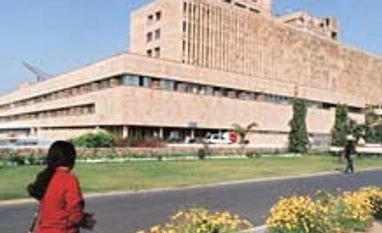 "IIT, engineering faculties to go for summer classes at companies")


 Connect with us on WhatsApp