4 min read Last Updated : Sep 08 2022 | 11:59 PM IST
It has mostly been one-way street for the markets that have moved up sharply since July. The frontline indices – the S&P BSE Sensex and the Nifty50 – have gained 6.7 per cent and 7.3 per cent, respectively in the last three months. The rally in the mid-and small-caps has been sharper with both the indexes surging 14 per cent and 9 per cent, respectively during this period.
This sharp run has made analysts at Jefferies cautious, who suggest the current uptrend in equities may not continue for long. The information technology sector (IT), Jefferies believes, remains at significant risk of sell-off if the Nifty were to correct. As a tactical strategy, they have moved some of their allocation from the IT sector to staples, expecting the latter to be a defensive bet in the event of a market correction. That apart, they have replaced Godrej Properties (more volatile) with Macrotech developers in their model portfolio.
Here are the key reasons why they have turned cautious on the current rally.
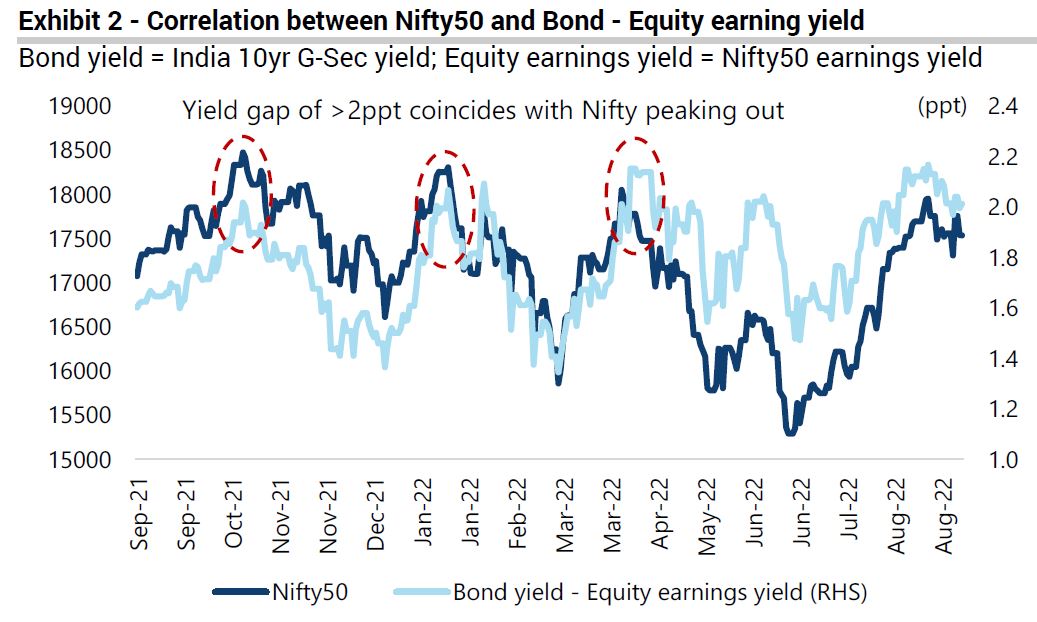
Bond yield, earnings yield gap: Expensive valuations, wrote Mahesh Nandurkar, managing director at Jefferies, in a report co-authored with Abhinav Sinha, is not a new phenomenon for Indian markets. However, the bond yield, earnings yield gap exceeding 2 percentage points (ppt) is making them uncomfortable, especially as bond yields could move higher, putting further pressure on the markets.
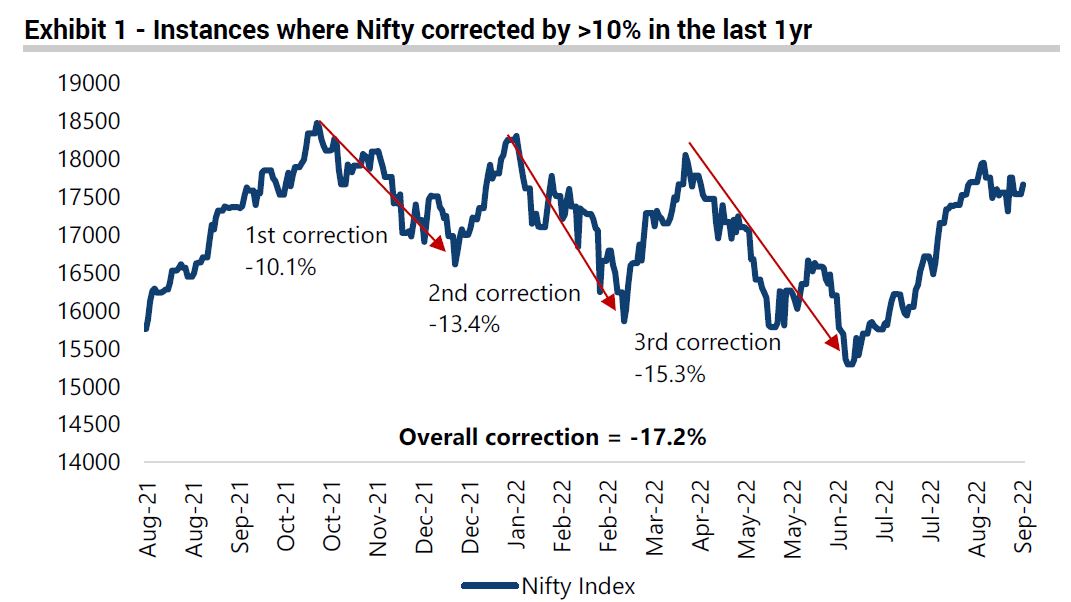
“Also, in the last one year, the Nifty has corrected by over 10 per cent thrice from a similar yield gap when the index was around the 18,000 mark. We see a strong chance of a repeat given the clues from the US Federal Reserve (US Fed),” the Jefferies note said. View chart
Global rates on the rise again: The US 10-year treasury rates are up around 70 basis points (bps) month-on-month (MoM) to 3.25 per cent, with the dollar index (DXY) has appreciated by nearly 4 per cent. Consequent to this, the US markets have moved within 7 per cent of their year-to-date (YTD) lows. Jefferies believes that the US Fed has much more tightening ahead than priced in as the low unemployment rates are causing inflation to run much higher than the 2 per cent target. View chart
“The US unemployment rate needs to double from the current 3 per cent so as to achieve the inflation target, which implies more / continued rate hikes and we assume Q1-CY23 exit rate of 4 per cent,” Nandurkar and Sinha wrote.
India's forex position needs monitoring: India's trade deficit has trended at record levels recently and the current account deficit (CAD) is on track to hit a decadal high of 3.5 per cent in fiscal 2022-23 (FY23), which Jefferies believes needs close monitoring. "The FX reserves (including forward cover) are down around $100 billion now from peak and import cover has fallen below 9-month levels. The GDP deflator has hit a decadal high, implying broad-based inflationary pressures," the report said.
Deja vu. What happened in the past three corrections? : From its October 2021 peak, the Nifty has had three declines of over 10 per cent with a total decline of 17 per cent to the June bottom. Among the larger sectors, Autos, Industrials and FMCG have outperformed, while information technology (IT), healthcare and materials have underperformed.
“Banks have been broadly market performers. Any potential market correction will likely emanate out of hawkish stance by the Fed and the likely stagflation worries. That could hit the IT sector,” Jefferies cautions.