Spice-based industry says India too costly
Oleoresin firms shifting to SE Asia, China, with others in this segment saying new taxes threaten viability
George Joseph Mumbai Indian companies keen on making value-added spice-based products say it’s making increasing sense to base these in neighbouring countries, not in this country.
Two leading oleoresin makers, Synthite Industries and Plant Lipids, have started units in China and in Sri Lanka, respectively. More producers of oleoresins and oils, like Arjuna Natural Extracts and AK Flavours, plan to start units in Southeast Asian countries.
State governments are proposing to introduce new taxes under the Biodiversity Act, impacting the industry, say heads of prominent companies. Imposition of fresh taxes will have sizable consequences, says George Paul, managing director of Kochi-based Synthite Industries.
The new proposals are targeted to protect the biodiversity of the Western Ghats, where most spices are grown, especially those used in value addition. Kerala, for instance, plans to introduce a three to four per cent purchase tax and a one per cent turnover tax under the Act. Experts say input availability and lower price tags attract companies to China, Vietnam, Sri Lanka, Indonesia, Cambodia and Myanmar. The new taxes might impel more to do so, more so as many of these countries also offer tax holidays, among other incentives.
Synthite has started a paprika-based extraction unit in China and Plant Lipids a pepper-based unit in Lanka. This when India has two-thirds of the total global market in oleoresin and spice oils, though this is diminishing.
N Emmanuel, a leading expert, says production of spices in India is not only falling but quality cannot be always ensured. And, the prices are the highest here.
In the case of paprika, said George Paul, productivity is high in China; so, the price is low. Indian companies cannot compete on the price. “Our market share in paprika has gone down to around 25 per cent. So, we moved to China,” he said. The cost of manufacturing in China is 25-30 per cent lower.
P K Kunjachan, managing director of Arjuna Natural Extracts, a leading manufacturer of turmeric-based products, said they seriously planned to set up an extraction unit in Indonesia, Vietnam or in Myanmar, where turmeric is both cheap and abundant. These countries offer space for export processing zones and a five to 10-year tax holiday. Apart from the tax proposals under the Biodiversity Act, he noted the new levies that states here plan to impose. These, he said, would make survival difficult. “So, we are very serious on moving to other countries, We have two units in India. Naturally, production here will come to a halt.”
A Mumbai-based analyst told Business Standard that higher productivity and lower prices attract Indian spice ingredient makers to move on to Southeast Asia. While India produces around 70 spices, Vietnam and Indonesia focus on five or six. While India produce spices in small and medium holdings, other countries produce on large plantations. This make them cost-advantageous and hence the lower prices, he added.
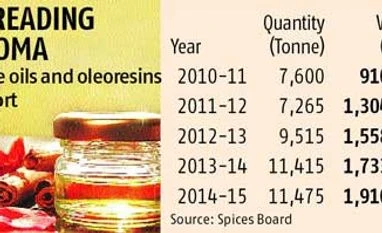
India in 2014-15 exported 11,475 tonnes of oils and oleoresins, valued at Rs 1,911 crore, one per cent more than in the previous year.

 "Spice-based industry says India too costly")


 Connect with us on WhatsApp