Associate Sponsors

Co-sponsor

The decision by four private insurance companies to opt out of the government’s flagship crop insurance programme — the Pradhan Mantri Fasal Bima Yojana (PMFBY) — is least surprising. The scheme, though better than most farm insurance instruments tried out with little success since the early 1970s, suffers from several inherent flaws which undermine its appeal to both insurers and farmers. While the insurance companies find it a loss-making business despite the hefty 90 per cent subsidy by the government, the farmers complain that the compensation is too meagre and comes with an inordinate time lag. The common impression that the subsidy is being cornered unfairly by insurance firms seems true but only partly. In the initial years after the launch of the scheme in 2016, salubrious weather had kept the crop damages and, hence, the reimbursement claims, low, thus, allowing the insurers to make good profits. But the situation has since changed with the aberrant monsoon rainfall — 9 per cent deficient in 2018 and 10 per cent excess in 2019 — inflicting heavy crop losses in several states. As a result, the compensation claims have exceeded the collected premium, thereby, eroding the insurance companies’ profits and making crop insurance an unattractive proposition for them.

The shortcomings in the design of the PMFBY are, indeed, many and varied in nature. These include the involvement of banks in the mandatory insurance of the crops grown by borrower farmers and the assessment of damages on the basis of average crop loss in a given contiguous area rather than in the farmer’s field. The banks usually adjust the compensation amount against the loans without the consent or knowledge of the farmers. This is stoking up trust deficit between farmers, banks and insurance companies. Besides, the involvement of the state governments in sharing the financial burden equally with the Centre, as also in estimating the losses through crop-cutting experiments and other means, is creating problems. The use of technology in damage evaluation is not happening to the desired extent. This is marring the credibility of the crop loss data and is also needlessly delaying the finalisation of reimbursement amounts. Moreover, states often release their share of the funds late and in installments, affecting the liquidity and paying capacity of the insuring firms. Many states have capped the sum assured at unrealistically low levels, which do not adequately cover costs. This apart, while this scheme covers most of the conceivable production hazards, right from prevented-sowing to post-harvest damage to the produce, it leaves out the all-important price risk, which matters the most to farmers.
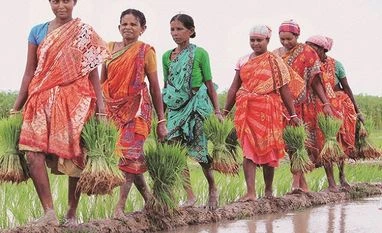
These issues need to be suitably addressed to prevent the PMFBY from meeting the same fate as its predecessors. The Indian farmers, being typically heavily indebted small land holders, need crop insurance to hedge their risks which are steadily mounting due to growing menace of pests and diseases and, more importantly, rapidly changing climate. The frequency of erratic and extreme weather events has already aggravated. Devastating cyclones, which used to be rare, have become a common feature in coastal areas. These developments have added to the woes of the cash-stressed farmers. Unless they are provided reliable risk management avenues like conveniently accessible farm insurance, their distress is unlikely to abate. 


One subscription. Two world-class reads.

Already subscribed? Log in

Subscribe to read the full story →
*Subscribe to Business Standard digital and get complimentary access to The New York Times

Smart Quarterly

₹900

3 Months

₹300/Month

SAVE 25%

Smart Essential

₹2,700

1 Year

₹225/Month

SAVE 46%
*Complimentary New York Times access for the 2nd year will be given after 12 months

Super Saver

₹3,900

2 Years

₹162/Month

Subscribe

Renews automatically, cancel anytime

Here’s what’s included in our digital subscription plans

Exclusive premium stories online

  • Over 30 premium stories daily, handpicked by our editors

Complimentary Access to The New York Times

  • News, Games, Cooking, Audio, Wirecutter & The Athletic

Business Standard Epaper

  • Digital replica of our daily newspaper — with options to read, save, and share

Curated Newsletters

  • Insights on markets, finance, politics, tech, and more delivered to your inbox

Market Analysis & Investment Insights

  • In-depth market analysis & insights with access to The Smart Investor

Archives

  • Repository of articles and publications dating back to 1997

Ad-free Reading

  • Uninterrupted reading experience with no advertisements

Seamless Access Across All Devices

  • Access Business Standard across devices — mobile, tablet, or PC, via web or app

Topics :crop insurancePMFBYPradhan Mantri Fasal Bima Yojanacrop insurance schemes

Next Story



