Hopes from India's free trade deals need not be high

Globally, there are over 350 Preferential Trade Agreem­e­n­ts (PTAs) or Free Trade Agre­e­ments (FTAs) or Regional Trade Agreements (RTAs). Most of them are defunct
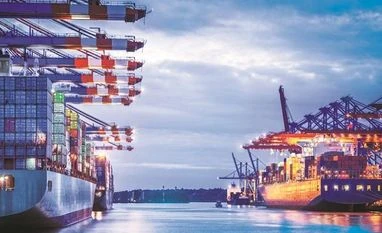
free trade agreements
TNC Rajagopalan
3 min read Last Updated : Nov 22 2021 | 12:57 AM IST
In recent months, the Commerce Ministry has stepped up its efforts to negotiate bilateral trade deals with some developed countries. Expectations of huge benefits from these endeavours need not be very high.

Globally, there are over 350 Preferential Trade Agreem­e­n­ts (PTAs) or Free Trade Agre­e­ments (FTAs) or Regional Trade Agreements (RTAs). Most of them are defunct. The few that have succeeded not only broke down the tariff barriers amongst themselves but also substantially cut their tariffs with countries that are not members of the trade agreements, says Anne Kruger, a noted economist and trade policy specialist. India maintains high tariffs compared to the developed countries, restricting the benefits that may accrue under the PTAs/FTAs. Also, in a free trade scenario, the concessions that producers in developed countries get will be more than what the Indian producers will get.

The Word Trade Organis­ation (WTO) says that there are mixed views on the effects of trade agreements on global trade liberalization. Though these are designed to benefit signatory countries, expected benefits may be undercut if distortions in resource allocation as well as trade and investment diversion are not minimized. Moreover, the increase in such agreements has produced the phenomenon of overlapping membership. This can hamper trade flows when traders struggle to meet multiple sets of trade rules. Furthermore, as the scope of the trade agreements broadens to include policy areas not regulated multilaterally, there may be more risk of inconsistencies among different agreements. Most older agreements covered tariff liberalization and related rules such as trade defence, standards and rules of origin only. Increasingly, the agreements have moved on to include liberalization of services as well as commitments in services rules, investment, competition, intellectual property rights, electronic commerce, environment and labour. This could give rise to regulatory confusion and implementation problems, says the WTO.

The FTAs/RTAs/RTAs have proliferated because the multilateral negotiations at the WTO, that require each member country to agree on every detail of a trade deal, have failed to take the Doha Development forward in the last two decades. Many RTA attempts have also gone through lengthy negotiations as every member country has to agree on every detail. In spite of these difficulties, in recent years, the Regional Comprehensive Economic Partnership, a grouping of 15 Asian countries and the Comprehensive and Progr­essive Agreement for Trans Pacific Partnership, a grouping of 11 countries in Asia and America have made some headway. India is not a part of these agreements.
 
India’s trade agreements with neighbouring countries have not resulted in great gains because they all have competing strengths of cheap labour. The trade agreements with developed countries like Japan and South Korea have also not gone too deep as they do not cover services.

The Commerce Ministry seems convinced that the multilateral negotiations at the WTO will not get very far and RTAs that include stron­g­er economies will be detrimental to the interests of the Indian producers. And that there are better opportunities in bilateral trade deals with developed countries that want to get better access to vast Indian markets and give greater access to Indian service providers, especially in the areas of information technology, accountancy, architecture, engineering etc. Any breakthrough in recognition of qualifications of Indian professionals by other countries will result in huge gains, reck­ons the Commerce Ministry.  

email:tncrajagopalan@gmail.com


One subscription. Two world-class reads.

Already subscribed? Log in

Subscribe to read the full story →
*Subscribe to Business Standard digital and get complimentary access to The New York Times

Smart Quarterly

₹900

3 Months

₹300/Month

SAVE 25%

Smart Essential

₹2,700

1 Year

₹225/Month

SAVE 46%
*Complimentary New York Times access for the 2nd year will be given after 12 months

Super Saver

₹3,900

2 Years

₹162/Month

Subscribe

Renews automatically, cancel anytime

Here’s what’s included in our digital subscription plans

Exclusive premium stories online

  • Over 30 premium stories daily, handpicked by our editors

Complimentary Access to The New York Times

  • News, Games, Cooking, Audio, Wirecutter & The Athletic

Business Standard Epaper

  • Digital replica of our daily newspaper — with options to read, save, and share

Curated Newsletters

  • Insights on markets, finance, politics, tech, and more delivered to your inbox

Market Analysis & Investment Insights

  • In-depth market analysis & insights with access to The Smart Investor

Archives

  • Repository of articles and publications dating back to 1997

Ad-free Reading

  • Uninterrupted reading experience with no advertisements

Seamless Access Across All Devices

  • Access Business Standard across devices — mobile, tablet, or PC, via web or app

More From This Section

Disclaimer: These are personal views of the writer. They do not necessarily reflect the opinion of www.business-standard.com or the Business Standard newspaper

Topics :free trade agreementTrade dealsWorld Trade Organization WTOIndian Economy

Next Story



