White label ATMs: Safe to assume the business is a resounding flop?

The business dynamics are stacked against white label ATMs, which could impact the government's goal of financial inclusion
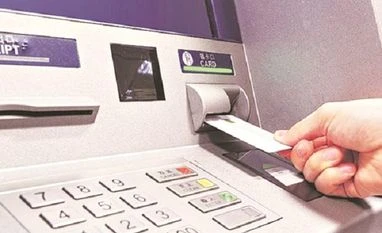
ATMs, ATM industry
At the heart of the mess is interchange — the pay-out by a card-issuing bank when you swipe at other banks’ ATMs, including on WLATMs
Raghu Mohan
5 min read Last Updated : Jun 29 2020 | 9:46 PM IST
Almost a decade after Mint Road an­nounced its white label au­tomated te­ller ma­chine (WLATM) policy, just about ev­eryone is unanimous it has been a re­sounding flop. Had it fired the way imagined, there would have been at least double the current number of ATMs at 234,357.

At the heart of the mess is interchange — the pay-out by a card-issuing bank when you swipe at other banks’ ATMs, including on WLATMs. “It has not been revised since 2012, despite requests from the industry. It has to move up to Rs 18 from Rs 15 for cash transactions and to Rs 8 from Rs 5 for non-cash transactions,” wails Ravi B Goyal, chairman and managing di­rector, AGS Tra­nsact Te­ch­nologies. It’s his way of po­inting out that if all other service charges have been raised, it is hard to ar­gue that the inter-change stays the same.

So, why has the intercha­nge not been increased? Be­cause banks are against it. As card issuers, it’s an expense they have to bear on behalf of customers. It’s another matter that after three free transactions in a metro (five in the non-metros), they can charge you anything between Rs 20 and Rs 30, which, to that extent, covers up for the inter-change pay out. But it does not hold for WLATMs that don’t issue plastic.  


The inter-change is not the only issue. You have other moving pieces on the chessboard like poor footfalls at WLATMs, the emergence of digital payments, cash-loading and operating charges that impact the business.

If 100 folks queue up at a bank’s proprietary ATM, only 40 go to WLATMs because the signage is not that of a bank. And you have empirical evidence to prove this lack of traffic at WLATMs from the way brown-label ATM dep­loyers (those who deploy on behalf of banks with their signage) bid for the rate per transaction (RPT) — the fee they get for every swipe — for the tender of 63,000 ATMs floated by North Block in 2012.

AGS Transact Technologies’ RPT bid was Rs 12.10. We don’t know how Prizm, FIS, Mphasis, Electronic Payment Systems and TCPSL bid, but it’s been gathered that one brown-label contender’s bid was as low as Rs 7 and that the bid-range was between Rs 7 and Rs 12.10. Now if the inter-change fee at Rs 15 is a sore point for WLATMs, how come so­me of them in their brown-label avatars bid lower on the RPT? Technically, it’s not inter-change, but that’s what you earn at the end of the day. Did WLATM players misread the plot?


The industry’s reasoning for this is typically, 60 per cent of all swipes are at banks’ own ATMs; the rest is at ATMs of other deployers. Again, you get to earn an RPT on 100 per cent of the transactions as a brown-label operator. And, so the argument goes, you can’t extrapolate RPT bids into WLATMs to say the clamour for a higher interchange is unfair. There’s another matter of detail: the interchange for WLATMs is not Rs 15 — it’s Rs 13 as Rs 2 goes to the sponsor bank. That’s because only banks can be part of the Mint Road settlement system.


The cap on the number of free transactions means customers pull out bigger amounts. This means that ATMs have to be “fed” cash at shorter intervals, which pushes up the operating costs. “We have the cost of cash, which is working capital for us,” says Ba­la­sub­ra­manian V, President, Merchant and Terminal Business at FSS. And adds: “You need at least 125 transactions on every ATM to make it viable. The footfalls in urban areas is lower due to digital payments. In the case of rural areas, operating costs are such that it is tough to make it viable”.

Should the Reserve Bank of India (RBI) bring back the subsidy it was offering to players who set up recyclers? These are ATMs that need not be loaded with cash as it accepts deposits, like a branch. Whatever cash is put in gets credited to customers’ account and moves into the cassettes (which hold cash) automatically.

“Subsidies have a temporary effect and makes the system and players complacent. Subsidies for making power more reliable would work better. Things like heavily subsidised solar panels or lithium-ion battery solution would be of help in the growth and continuity of transactions which are key for business sustainability,” notes Anurag Nigam, Head of ATM Managed Services (India and Philippines) at FIS. He is of the view that RBI needs to look at measures for the long-term sustainability of the business. Nigam makes a case for working capital availability at the repo rate for the industry as this can also fuel economic activity as the focus will be on better performance and availability of the WLATM network.

What is at stake is the direct benefits transfer scheme under the Jan Dhan Yojna — WLATMs is a cash-out point for the beneficiaries. “ATMs are the first step towards financial inclusion in rural and tier-3 and 4 towns. Given the need and market opportunity for WLATMs in these areas, operators should be given equal preference to access cash so as to replenish their ATMs,” Goyal says.

Simply put, you have cash in WLATMs, but the business is running out of it.

One subscription. Two world-class reads.

Already subscribed? Log in

Subscribe to read the full story →
*Subscribe to Business Standard digital and get complimentary access to The New York Times

Smart Quarterly

₹900

3 Months

₹300/Month

SAVE 25%

Smart Essential

₹2,700

1 Year

₹225/Month

SAVE 46%
*Complimentary New York Times access for the 2nd year will be given after 12 months

Super Saver

₹3,900

2 Years

₹162/Month

Subscribe

Renews automatically, cancel anytime

Here’s what’s included in our digital subscription plans

Exclusive premium stories online

  • Over 30 premium stories daily, handpicked by our editors

Complimentary Access to The New York Times

  • News, Games, Cooking, Audio, Wirecutter & The Athletic

Business Standard Epaper

  • Digital replica of our daily newspaper — with options to read, save, and share

Curated Newsletters

  • Insights on markets, finance, politics, tech, and more delivered to your inbox

Market Analysis & Investment Insights

  • In-depth market analysis & insights with access to The Smart Investor

Archives

  • Repository of articles and publications dating back to 1997

Ad-free Reading

  • Uninterrupted reading experience with no advertisements

Seamless Access Across All Devices

  • Access Business Standard across devices — mobile, tablet, or PC, via web or app

Topics :ATMsReserve Bank of IndiaUS Federal Reserve

Next Story



