Some questions on Rafale deal

Why was the number of planes reduced from 126 to 36? If the government has now issued another tender for over 100 planes, how is the reduction justified?
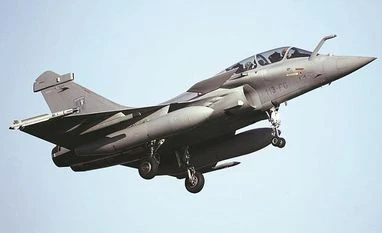
Rafale, Jet
Karan Thapar
Last Updated : Sep 24 2018 | 1:34 AM IST
Depending on who you talk to the Rafale deal is either mired in scandal and controversy or it’s the very epitome of squeaky-clean transparency. It’s hard to imagine two positions further apart. Which is why it may be a good idea to sit back and take a careful look at all that we’ve been told and then ask what it adds up to. 

Let me focus on three concerns. First, the decision to reduce the number of planes from 126 to 36. Did this happen in disregard of the Air Force’s requirements? If the government has now issued another tender for over 100 planes how is the reduction justified?

On September 1, former Air Force Chief Krishnaswamy wrote that in 2014, the Air Force made a request for an urgent purchase of two squadrons, that is, 36. The present Air Force Chief, B S Dhanoa, has defended this “emergency procurement” claiming there have been several instances of similar procurements in the past. In such circumstances, he adds, two squadrons is the ideal quantity. But the rest of the Air Force’s requirement is still uncatered for and who knows how long that will continue. 

The second issue is the price. In November 2016, the government told Parliament that each Rafale would cost Rs 6.70 billion. A year later both Dassault and Reliance Defence claimed the price would be Rs 16 billion. The latter figure has led many to claim the planes are considerably more expensive than the ones Congress was negotiating.

Arun Jaitley, however, insists the cost negotiated by the UPA included room for price escalation and currency fluctuation and, therefore, today the cost per plane would be 9 per cent higher than what the NDA has negotiated in terms of the simple plane and 20 per cent higher in terms of the weaponised plane. The Air Force’s Deputy Chief, R Nambiar, has gone a step further. He says the present Rafale deal is 40 per cent cheaper than the earlier one. 

In this connection, it’s interesting to note a change in the present government’s position. Initially, it claimed the higher price per plane was because of India-specific add-ons. When Arun Shourie and Yashwant Sinha revealed the 2015 agreement specified the NDA was buying planes with the same configuration as the UPA’s, the government became silent on this subject.

The third issue is the decision to award the Rs 300 billion offsets to Anil Ambani’s Reliance Defence. Critics point out that this company has no experience of manufacturing aircraft whilst it carries a heavy debt burden. And now Francois Hollande has claimed Reliance was forced on the French by the Indian government.

In his defence, the CEO of Reliance insists Dassault has a right to give the offsets to any Indian partner it chooses, a point corroborated by the Defence Minister in recent interviews. Second, no component of the 36 planes will be made in India. Third, it is no secret Dassault and HAL could not reach an agreement over the 126 aircraft deal. So it is not surprising the former would choose a different partner this time round.

These explanations are not only undermined by Monsieur Hollande but also by the fact the CEO of Dassault, Eric Trappier, has said the joint venture with Reliance will manufacture parts for his Rafale plane. But will they be for the planes bought by India or manufactured for other countries?

So, now, what does all of this add up to? To my mind, the outcome is not just uncertainty but confusion. There is no doubt serious questions have been raised but, equally, we don’t have clear answers. Unless you take sides, you probably don’t know what to think.

Finally, when Shourie and Sinha call the NDAs Rafale deal “a major scandal... by far larger than the ones that the country has had to contend with in the past”, it’s worth bearing in mind that so far there’s no clear money trail nor an indisputable smoking gun. But that doesn’t mean there aren’t disturbing questions and a strange resistance by the government to reveal the price, which only adds suspicion to concern. And, now, the Hollande claim that Reliance was imposed on the French could amount to the BJP’s Bofors moment. It’s a damning revelation and the government will find it difficult to counter.

One subscription. Two world-class reads.

Already subscribed? Log in

Subscribe to read the full story →
*Subscribe to Business Standard digital and get complimentary access to The New York Times

Smart Quarterly

₹900

3 Months

₹300/Month

SAVE 25%

Smart Essential

₹2,700

1 Year

₹225/Month

SAVE 46%
*Complimentary New York Times access for the 2nd year will be given after 12 months

Super Saver

₹3,900

2 Years

₹162/Month

Subscribe

Renews automatically, cancel anytime

Here’s what’s included in our digital subscription plans

Exclusive premium stories online

  • Over 30 premium stories daily, handpicked by our editors

Complimentary Access to The New York Times

  • News, Games, Cooking, Audio, Wirecutter & The Athletic

Business Standard Epaper

  • Digital replica of our daily newspaper — with options to read, save, and share

Curated Newsletters

  • Insights on markets, finance, politics, tech, and more delivered to your inbox

Market Analysis & Investment Insights

  • In-depth market analysis & insights with access to The Smart Investor

Archives

  • Repository of articles and publications dating back to 1997

Ad-free Reading

  • Uninterrupted reading experience with no advertisements

Seamless Access Across All Devices

  • Access Business Standard across devices — mobile, tablet, or PC, via web or app

More From This Section

Disclaimer: These are personal views of the writer. They do not necessarily reflect the opinion of www.business-standard.com or the Business Standard newspaper
Next Story



