Will democracy survive globalisation?

The traditional middle class in the Western world has been the big loser of globalisation
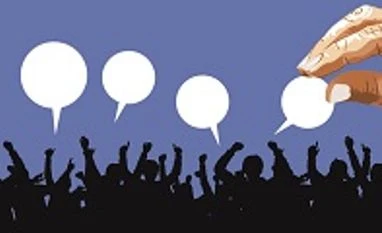
Illustration by Binay Sinha
Claude Smadja
Last Updated : Mar 21 2017 | 11:58 PM IST
Now for a wild question: Will the democratic system — in the way it has been practiced in the Western world — survive globalisation? Is this question as far-fetched as it seems to be? This might warrant a closer look. 

The democratic system has developed and expanded being sustained by at least three fundamentals. First, an ever expanding middle class confident about its future, feeling that it has a strong stake in the system, has been a necessary component and condition for a well-functioning democracy. Second fundamental is some sense of a basic convergence of national perspectives between the establishment — business and political, the intelligentsia and the media — and the largest segment of the population, even though this would not prevent different political parties and schools of thought to compete fiercely to have their views prevail at the time of a legislature or of a presidential mandate, before the rules of alternation of power would come into play. The third fundamental is the ability of the democratic system to provide citizens with a good level of economic security and predictability, personal safety and a sense that they can have a voice — even a minimal one — in the system. 

However, these three fundamentals have increasingly been put into question by the way globalisation, sustained by the ICT revolution, has run its course.

The traditional middle class in the Western world has been the big loser of globalisation over the last 30 years because the phenomenon has broken the automatic causality between technology-quality-productivity and high salaries/high wages and increasing standards of living that the traditional middle class had enjoyed. The new form of competition from emerging economies that has come with globalisation, cumulating with the impact of technological revolution on traditional activities, have directly hurt the acquired advantages of this middle class. Of course, globalisation and the ICT revolution as well as the emergence of global financial capitalism have also spurred the rise of a new middle class but the size of this category is way smaller than the traditional one, which has not only been shrinking in terms of size but has also seen its standard of living decline — or at best stagnate — over the past 20 years. The real median household income in the US declined from $57,000 to $52,000 — a 9 per cent fall  between 1999 and 2013. More generally, a McKinsey study found that 65 per cent to 70 per cent of the people in 25 advanced economies had seen a complete stagnation of their earnings between 2005 and 2014. And, whether in the US or in Europe, the political leaders have proved totally unable to address this major issue, eroding the faith in, and functioning of, the democratic system. 

Thus, the feeling that “the system” had been increasingly tilted towards working mostly to the benefit of a privileged elite, with total disregard to the interests of the middle class, has put into question the implicit notion in democracies that whatever the political differences or even divergences among segments of the population there was this strong national common denominator, some kind of basic convergence of national perspectives. The CEO of General Motors was reflecting a reality when he said in 1953 at his confirmation as Secretary of Defense “for years I thought what was good for our country was good for General Motors and vice versa”. No leader of a multinational company would dare to say something like that today lest her/his voice would be drowned by the boos of a skeptical audience. The prevailing feeling in Western democracies is increasingly one of “us” against “them”, whoever the “us and “them” are supposed to be, leading to an increasingly harsh polarisation of society and of the political debate, with more strident and extreme positions being taken. 

Many segments of the corporate world and of the intelligentsia did not help their cause towards the distressed middle class with an attitude which too often considered that people did not really understand what globalisation was all about and that when they would be able to do so they would rally to the cause. Too many speeches about actions or policies supposed to cushion the disruptive impact of globalisation and of the ICT revolution have remained empty words for too long thus feeding the growing frustration and anxiety about the future of a whole category of the population.

Which leads to the third fundamental now put into question: The level of civilisation and democratic achievement of a society used to be measured to a great extent by the degree of economic security, of personal safety, of predictability that this society was able to provide its citizens with. However, the members of the traditional middle class in the developed countries have seen their economic security almost disappear; they will have to work longer and expect smaller pension benefits, their children might have a less economically secure future; they feel that their social and daily life environment is less safe than before and that their identity is threatened by mass migrations of people coming from different cultures and ethnical background; and they know that predictability has become an almost obsolete notion.

Illustration by Binay Sinha
Will the trends eroding some key fundamentals of the way the democratic system as we have practiced it be long lasting ones? There are some chances that this could be the case for the foreseeable future. In the same way, the explosion of a number of NGOs being active on every domain one can imagine is also — to a significant extent — another element putting into question the practice of democracy as we have practiced it so far. Many of these organisations, some of them very opaque about their financing, their functioning, their actual size, are bypassing the normal channels of the system and even going against its logic by acquiring a disproportionate influence through a very clever use of social media and trying sometimes successfully to force the hands of Parliaments and governments.

Does all this mean that democracy, as we have practiced it, is doomed? It is too early to say. Will it be replaced by a new, updated version of representative government whose forms and modalities are yet to be defined? Again, too early to say. But there is a very strong probability that we are going towards increasing social upheavals and an even more dangerous political polarisation putting at risk the way our present systems function if political and business leaders, along with the intelligentsia, continue to be incapable to provide the responses and the policies that will help alleviate the legitimate concerns and anxieties of the segment of the population whose support for — and involvement in — the democratic system is the most crucial for the sustainability of this system. 
 
The writer is President of Smadja & Smadja, a strategic advisory firm 
@ClaudeSmadja

One subscription. Two world-class reads.

Already subscribed? Log in

Subscribe to read the full story →
*Subscribe to Business Standard digital and get complimentary access to The New York Times

Smart Quarterly

₹900

3 Months

₹300/Month

SAVE 25%

Smart Essential

₹2,700

1 Year

₹225/Month

SAVE 46%
*Complimentary New York Times access for the 2nd year will be given after 12 months

Super Saver

₹3,900

2 Years

₹162/Month

Subscribe

Renews automatically, cancel anytime

Here’s what’s included in our digital subscription plans

Exclusive premium stories online

  • Over 30 premium stories daily, handpicked by our editors

Complimentary Access to The New York Times

  • News, Games, Cooking, Audio, Wirecutter & The Athletic

Business Standard Epaper

  • Digital replica of our daily newspaper — with options to read, save, and share

Curated Newsletters

  • Insights on markets, finance, politics, tech, and more delivered to your inbox

Market Analysis & Investment Insights

  • In-depth market analysis & insights with access to The Smart Investor

Archives

  • Repository of articles and publications dating back to 1997

Ad-free Reading

  • Uninterrupted reading experience with no advertisements

Seamless Access Across All Devices

  • Access Business Standard across devices — mobile, tablet, or PC, via web or app

More From This Section

Disclaimer: These are personal views of the writer. They do not necessarily reflect the opinion of www.business-standard.com or the Business Standard newspaper
Next Story



