Exoplanet discovery brings 'Earth 2.0' closer to reality
It sets a new record for greatest number of habitable-zone planets found outside our solar system
Press Trust of India Washington Finding a 'second Earth' may be just a matter of 'when' rather than 'if', suggest astronomers who discovered a new solar system of seven planets with the potential to host life located less than 40 light years away.
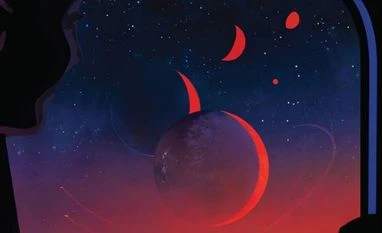
The US space agency's Spitzer Space Telescope found the first known system of seven Earth-sized planets around a single star.
Three of these planets are located in the habitable zone, the area around the parent star where a rocky planet is most likely to have liquid water.
The discovery sets a new record for greatest number of habitable-zone planets found around a single star outside our solar system.
All of the seven planets could have liquid water - key to life as we know it - under right atmospheric conditions, but the chances are highest with the three in the habitable zone.
"This discovery could be a significant piece in the puzzle of finding habitable environments, places that are conducive to life," said Thomas Zurbuchen, associate administrator at NASA's Science Mission Directorate in Washington.
"Answering the question 'are we alone' is a top science priority and finding so many planets like these for the first time in the habitable zone is a remarkable step forward toward that goal," said Zurbuchen.
At about 40 light-years - 235 trillion miles - from Earth, the system of planets is relatively close to us, in the constellation Aquarius.
The exoplanet system is called TRAPPIST-1, named for The Transiting Planets and Planetesimals Small Telescope (TRAPPIST) in Chile.
In May 2016, researchers using TRAPPIST announced they had discovered three planets in the system.
Assisted by several ground-based telescopes, including the European Southern Observatory's Very Large Telescope, Spitzer confirmed the existence of two of these planets and discovered five additional ones, increasing the number of known planets in the system to seven.
Following up on the Spitzer discovery, NASA's Hubble Space Telescope has initiated the screening of four of the planets, including the three inside the habitable zone.
These observations aim at assessing the presence of puffy, hydrogen-dominated atmospheres, typical for gaseous worlds like Neptune, around these planets.
The findings were published in the journal Nature.

 "Exoplanet discovery brings 'Earth 2.0' closer to reality")


 Connect with us on WhatsApp