Tweak office timings, help us tackle peak hour rush: DMRC
DMRC has written to the NASSCOM and the Union Ministry of Urban Development in this regard
Press Trust of India New Delhi If Delhi Metro has its way, offices in National Capital Region (NCR), both private and government, may have to tweak office timings to deal with burgeoning peak hour crowd, as part of the 'flexi timing' concept.
DMRC has written to the National Association of Software and Services Companies (NASSCOM) and the Union Ministry of Urban Development (MoUD) in this regard with a detailed blueprint of the plan.
The move has been necessitated by the fact that nearly 70 per cent of Metro's average daily traffic travels during morning peak hours, which is from 8 AM to 11 AM.
Flexi (also known as staggered) timings, will ensure that employees go to work over several shifts in the morning, from 8.45 AM to 10 AM, thus "balancing off the peak and off-peak hour crowd", DMRC chief spokesperson Anuj Dayal told PTI.
Subsequently, their office would get over in multiple shifts from 5.15 PM to 6.30 PM, radically different from the currently prevalent uniform working hours.
Dayal said that Delhi Metro proposed flexi timing as the other internationally practiced concept, namely 'differential pricing' (offering discounts for traveling early), was not feasible for DMRC at the moment.
"It is not possible at present and moreover the international experience, especially in Singapore and Hong Kong, in this regard has shown that this does not have much impact on the traffic pattern," he said.
The DMRC had written to them (NASSCOM and MoUD) last year (October and December) itself with the proposal of variable working hours and has recently sent reminders over the same.
As per available data, 55 trains run, carrying nearly 50,000 passengers on Yellow Line (Line 2) during the morning peak hours while there are 64 trains for around 42,000 passengers on Blue Line, in the same period.
During off-peak hours, from 11 AM to 4.30 PM, the passenger count comes down to around 25,000 on Yellow line and 22,000 on Blue line, the busiest corridors of Delhi Metro's vast network criss-crossing the national capital region.
"The data establishes the fact that peak hours (morning) witness the maximum volume of traffic which calls for innovative steps in managing the rush," another official said.

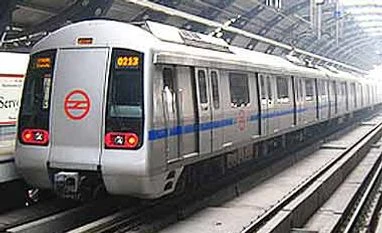 "Tweak office timings, help us tackle peak hour rush: DMRC")


 Connect with us on WhatsApp