Wage growth in 2017 slowed to its lowest rate since 2008, the year of the financial crisis, despite solid economic growth and falling unemployment in major economies, the International Labour Organization said Monday.
The latest global wage report from the United Nations agency also found that women worldwide continue to be paid about 20 per cent less than men.
Based on data from 136 countries, the ILO said that wage growth fell from 2.4 per cent in 2016 to just 1.8 per cent last year.
But the outlook for workers is bleaker when the calculations exclude China, where a massive population and steadily rising wages heavily influence the data.
Discounting China, wages only rose 1.1 per cent last year, compared with 1.8 per cent in 2016.
Consistent with recent trends, the report also highlighted substantial differences between high-income and developing countries.
In what the ILO calls "emerging and developing G20 economies", wages have almost trippled in the last 20 years, including 4.3-per cent growth last year.
But in advanced G20 nations, wages have risen by a meagre nine per cent over the past two decades and basically flatlined in 2017, with a rise of just 0.04 per cent.
Those figures, against the backdrop of rising economic growth and falling unemployment in high-income countries is "puzzling", ILO director-general Guy Ryder said in a statement.
Ryder also called the persistent gender pay gaps "one of today's greatest manifestations of social injustice." "All countries should try to better understand what lies behind them and accelerate progress towards gender equality," he added.
The ILO also downplayed the importance of the factors traditionally used to explain gender pay discrepencies, notably different levels of education.
"In many countries women are more highly educated than men but earn lower wages, even when they work in the same occupational categories," ILO wage specialist and report co-author, Rosalia Vazquez-Alvarez, said in the statement.
Vazquez-Alvarez told reporters in Geneva that the gender pay gap broadly remains "a highly unexplained phenomenon". "To some extent, it is driven by prejudices (and) by stereotypes," she said, stressing that the gender pay gap cannot be explained by productivity variances between men and women.
The pay gap is prevalent in nearly all of the countries surveyed in the report, but key differences exist among regions, ILO said.
For example, in wealthier countries, the pay discrepencies are most pronounced at the top end of the salary scale, while in developing countries the gender gaps are largest among the lowest earners.

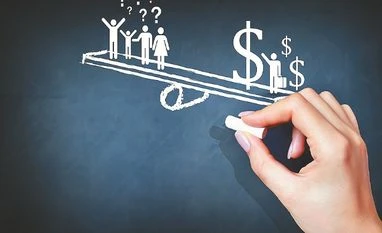 "Wage growth slows to worst rate since 2008 financial crisis: UN report")


 Connect with us on WhatsApp