Marketing needs to pick up where politics left off
But in many ways 2016 has been a watershed year for data to go wrong
Prabhakar Mundkur Prophets of big data have always claimed that “without data you are just another person with an opinion”. An axiom that appealed to many. But in many ways 2016 has been a watershed year for data to go wrong. For forecasts to bite the dust. And for public opinion to be grossly miscalculated. Giving rise to a change in our vocabulary with words like “post-truth” being included in the Oxford dictionary as the word of the year.
We are now truly in the post-truth era of marketing and, as Ralph Keyes aptly puts it, an era of dishonesty and deception.
So what are the implications for marketing in the post-truth era?
We often look at data and interpret it to support our own beliefs This is where perhaps the world may have gone wrong in predicting both the results of Brexit and the US presidential elections. Because people decided what they wanted to see in the data. The observer-expectancy effect is a form of reactivity in which a researcher’s cognitive bias causes them to subconsciously influence the participants of an experiment. Confirmation bias can lead to the experimenter interpreting results incorrectly, because of the tendency to look for information that conforms to their hypothesis, and overlook information that argues against it.
This has implications for both quantitative and qualitative research. Years ago in a qualitative ad test for one of the leading global deodorant brands, the marketer wanted to know if he should use Bjorn Borg, who between 1976 and 1980 had won five Wimbledon titles, or the new kid on the block John McEnroe, who had every promise of a bright future. Borg was famously called the “iceberg” for his unemotive personality on the tennis court, whereas McEnroe was effusive, demonstrative and extroverted. But then he wasn’t
No. 1, which can make all the difference to a brand’s appeal. The qualitative researcher recommended that the brand should go with McEnroe. But an imaginative creative director saved the day. For him the implication of the research was that they still needed to go ahead with Bjorn Borg, but they had to make him really emote on the screen for a more effective commercial. The creative director’s decision turned out to be right. The brand had an eminently successful commercial.
Feelings are more important than facts One of the most important lessons from both Brexit and the US presidential elections has been that feelings are more important than facts. And in our anxiety to rely on facts for everything, we may have just forgotten about feelings. Feelings notoriously are perhaps better gauged by the intuitive mind rather than the logical mind.
We are notoriously bad at gauging feelings. I hear researchers say “the consumer said this...” followed by a consumer quote on a PowerPoint slide. But as intuitive marketers we should be asking not what the consumer said, but what is really behind what the consumer said. We should really be arguing and discussing why the consumer said that.
Thinking fast and slow Kahneman in Thinking, Fast and Slow sidesteps years of confusion by using two terms: the brilliantly bland System 1 and System 2. System, 1 which is the brain's fast, automatic, intuitive approach, and System 2, which is the mind’s slower, analytical mode where reason dominates. Kahneman says System 1 is more influential, guiding and steering System 2 to a very large extent.
The funny thing is that while we are willing to accept Kahneman’s theory applies quite well to consumer decision-making, most marketers seem reluctant to use their own System 1 while taking marketing decisions, preferring to wade through reams of tools and research data to activate their System 2.
Marketing needs to pick up where politics left off in the post-truth era. This may prompt marketers to use their intuition more in 2017 and the years to come. Because after all, if we went as wrong with brand strategy as we did with Brexit, the US presidential elections, or the Great Indian Demonetisation, marketers would have hell to pay.

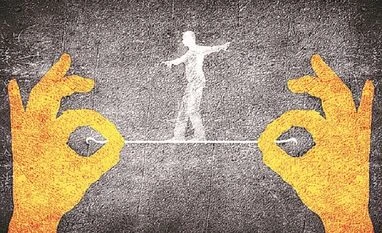 "Marketing needs to pick up where politics left off")


 Connect with us on WhatsApp