Home / Book / Dalio's debt playbook: What Japan got wrong, and India may be getting right
Dalio's debt playbook: What Japan got wrong, and India may be getting right
In 'How Countries Go Broke', the billionaire investor offers a sweeping view of macro cycles and fiscal choices - arguing for 'beautiful deleveraging' as the best path through rising global risk
5 min read Last Updated : Jun 23 2025 | 10:56 PM IST
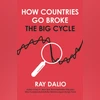
How countries go broke
by Ray Dalio
Published by Simon & Schuster
400 pages ₹1,499
Ray Dalio is a successful hedge fund founder with a net worth of about $14 billion as his calling card. A YouTuber, his opinions on investments, politics and why things happen are freely available. In a recent episode, an NBC anchor asks whether Donald Trump’s tariff war can mitigate MAGA dissatisfaction about jobs and stagnating incomes. His answer is ambivalent — agreeing with the diagnosis of the problem that the demise of manufacturing has enhanced strategic risk and lowered family income, but not with the solution proposed.
Rather than raise tariffs and risk inflation, he would broaden the scope of reform. Reduce the fiscal deficit from 6 per cent to 3 per cent of GDP to manage debt build-up (340 per cent of GDP and growing). To protect business sentiment and enhance economic growth, cut fed interest rates to 3 per cent from 4.25 per cent currently — implicitly agreeing with President Trump that Jerome Powell is wrong. Increase domestic tax revenues by 1 per cent to achieve what he describes as a “beautiful deleveraging”.
Mr Dalio views world history as “big cycles,” each lasting between 60 and 90 years and composed of “small cycles” of six to nine years each. Each cycle is shaped by five forces. First, the use of money, credit, debt, and interest rates, which dominates the analysis. Second, the health of the “domestic political order,” ranging from collaboration to violent contestation. Third, the health of the geopolitical order. Fourth, “Black swan” events. Fifth, the impact of demographics and climate change. The existing big cycle began in 1945 and is now ending badly, as multilateralism is rejected, violent confrontation escalates, and normative fundamentals crumble. Sadly, these will “squelch” the accompanying, unprecedented benefits from innovation and technology.
Mr Dalio is a globaliser but recognises that the “world order”, created post-1945 by victorious Western countries no longer aligns with global realities — the massive growth of Asia, and the shrinking economic space for Europe. He is a cheerleader for multilateralism and identifies the build-up of unsustainable debt as the beginning of the end. He devotes two chapters to Japan and China. The one on China leans towards a review of political history rather than monetary policy. The one on Japan describes how once rapid export growth and private exuberance ended in 1990, Japan failed to adopt the principles of “beautiful deleveraging”, even though most of its debt was in local currency and owed to domestic creditors. Nor did it restructure its debts leading to a decade of deflation with interest rates above economic growth and inflation rates and government debt piling up.
Post-2013 , the policy stance changed under Shinzo Abe. The “three arrows” of enhanced money supply, fiscal stimulus, and reforms were released. Fiscal stimulus and debt monetisation by the Bank of Japan pushed interest rates down and depreciated the yen by 40 per cent, making exports more competitive. The losers were foreign investors. Domestic buyers of bonds earned less than if they had invested in foreign bonds or gold. Domestic consumers enjoyed stable incomes and prices for goods. Non-monetary factors favouring this strategy were an ageing, shrinking population with high per capita income, high quality infrastructure and a deep arsenal of foreign exchange built by buoyant exports. Nevertheless, the Bank of Japan is skating on thin ice, with a monetary base five times that of the Fed’s, making it vulnerable to hardening of interest rates. Mr Dalio might be amazed to know that India achieved the objectives of “beautiful deleveraging” by adapting the path he advocates to the context of the four other forces. A functional democracy, wedded to multilateralism, it grew out of poverty to middle-income status. The highest fiscal deficit (Union and states) since 1960 was 13 per cent of GDP during the pandemic, now down to about 8 per cent versus the norm of 7 per cent, with debt — mostly domestic — at about 90 per cent. The highest inflation rate since 1960 was 29 per cent in 1971 during the “oil shock”. The average was 7.3 per cent and the average since 2014 is 5 per cent with a downward trend. Not too shabby. The unanswered questions are: Does “beautiful deleveraging” work only for high income economies? Cyclical economic patterns are only visible post the fact. How do policymakers identify in real time, where they are, if cycle lengths vary by as much as 50 per cent? Of the “five forces” mechanically creating cycles —four relate to politics or chance. How significant, then, is adherence to the prescriptions on debt, credit and interest rates for a “beautiful deleveraging”? Jerome Powell might be straying from these prescriptions. But is he not adapting to the limitations of his context?