Associate Sponsors

Co-sponsor

Keeladi's discoveries remind us that evidence, not ideology, makes history

As new archaeological finds challenge the dominant narrative of India's antiquity, replacing dogma with pragmatism is the only way to understand the past
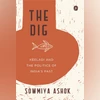
The Dig: Keeladi and the politics of India's past
The Dig: Keeladi and the politics of India’s past
Arundhuti Dasgupta
5 min read Last Updated : Feb 04 2026 | 11:15 PM IST
The Dig: Keeladi and the politics of India’s past
By Sowmya Ashok
Published by Hachette India
307 pages  ₹799
 
When news about the archaeological findings at Keeladi in Tamil Nadu first hit the headlines, it created quite a stir. Being far away from the more glamorous Harappan digs of the north, it had never really made it to the list of prominent sites on any archaeological map and had escaped the attention of a nation obsessed with the Indo-Gangetic plain as the foundation of Indian civilisation. Keeladi was unknown outside a closed circle of historians and culture enthusiasts; few had even heard about it even though the site lay barely a few hours from Madurai. 
All that changed when 6,000-odd artefacts were dug out of its trenches. It was not just the sheer volume, but also the breathtaking sweep of the discoveries that took people by surprise. From pushing back the date of urbanisation in south India, to providing fresh insight into the genetic diversity of the subcontinent, the new archaeological finds challenged the dominant narrative about India’s antiquity. Until Keeladi it was assumed that urban life of notable scale had emerged in North India, but now it seemed that there had been a vibrant urban settlement in South India as far back as 600 BCE. 
The discoveries made Keeladi an overnight star and provided a big breakthrough moment for Indian archaeology. But then, as author Sowmya Ashok writes, politics came knocking. The site and the team in charge of the dig were subjected to unprecedented scrutiny and the conversations were more about religion, cultural superiority and the true intentions of the leading archaeologists. 
Political, religious and linguistic affinities mattered more than the potsherds and inscriptions that were discovered at the site. People questioned their authenticity, debated the absence of religious artefacts at Keeladi that ought to have linked it with the ancient Vedic culture and challenged the intentions of the archaeologist who had led the dig at Keeladi, K Amarnath Ramakrishna, who had compared the site with Mohenjo Daro during a press conference (a misquote as he later clarified to the author of the book). Amarnath was soon transferred out of Keeladi, which opened up a new round of acrimonious exchanges between the central government and the state government in Tamil Nadu. 
The story of Keeladi, much like that of any ancient site, is far more complex than the linear narratives of origin and antiquity being spun around it. It is also hugely shortsighted to place the site within the north-south binary that many historians and archaeologists have done in the past. For instance, there could have been a deeper study of the antiquity of Madurai, the city with a recorded history that goes back to 3rd century BCE. It could have focused national attention on the rich Sangam literature and its documentation of the region’s past in prose and poetry. 
Across the world, new archaeological discoveries are changing the way the past was perceived and driving home the fickle nature of timelines, evolutionary theories and ideas about original settlements and migratory routes. For instance, archaeologists in Saudi Arabia have recently found a panel of carvings depicting life-size camels and donkeys etched into the steep cliff sides of a mountain known as Jebel Misma that are believed to have been created between 11,400 and 12,800 years ago. “They are the oldest large-scale naturalistic animal art ever found in the Middle East and are among the oldest in the world,” the New York Times reported. This discovery pushes the age of the earliest settlements in Saudi Arabia to the end of the Ice Age and has transformed the prevalent notions about prehistoric art in the region. Similarly, linguists and genetic scientists have dismantled old theories about race, migration and the evolution of language almost everywhere. The past cannot be boxed into a homogenous narrative. Every site will throw up artefacts and generate perspectives that challenge earlier notions and even contradict them. Deeper understanding about ancient culture, about our ancestors and about the societies that gave birth to modern India is possible only when we trade dogma for pragmatism. 
For instance, genealogical studies in the country have long been mired in debates about genetic purity. Even today, researchers are forced to rephrase their findings if it hints at a mixed genetic legacy. However, the truth is that there is nothing pure about the populations anywhere in the world and especially so in India. The author writes about the archaeogenetic research being conducted at the ancient DNA laboratory at the Madurai Kamaraj University and her conversations with the researchers there that show that India was never inhabited by a single large population. It was an amalgam of many different groups of people and as their descendants, we carry a mixed genetic legacy. Hence, when the findings at Keeladi and other digs in the country are used to demonstrate a pure race of inhabitants, it does not further the understanding about the country’s past. 
The book raises several questions about the way we have sought to portray the past. But its greatest achievement is the attention that it pays to the people who manage the story of the past. The archaeologists, researchers, specimen collectors, historians and teachers are the true heroes and the author writes about them with empathy, understanding and her tongue firmly in her cheek. 
The reviewer teaches folklore and mythology and is cofounder of The Mythology Project

One subscription. Two world-class reads.

Already subscribed? Log in

Subscribe to read the full story →
*Subscribe to Business Standard digital and get complimentary access to The New York Times

Smart Quarterly

₹900

3 Months

₹300/Month

SAVE 25%

Smart Essential

₹2,700

1 Year

₹225/Month

SAVE 46%
*Complimentary New York Times access for the 2nd year will be given after 12 months

Super Saver

₹3,900

2 Years

₹162/Month

Subscribe

Renews automatically, cancel anytime

Here’s what’s included in our digital subscription plans

Exclusive premium stories online

  • Over 30 premium stories daily, handpicked by our editors

Complimentary Access to The New York Times

  • News, Games, Cooking, Audio, Wirecutter & The Athletic

Business Standard Epaper

  • Digital replica of our daily newspaper — with options to read, save, and share

Curated Newsletters

  • Insights on markets, finance, politics, tech, and more delivered to your inbox

Market Analysis & Investment Insights

  • In-depth market analysis & insights with access to The Smart Investor

Archives

  • Repository of articles and publications dating back to 1997

Ad-free Reading

  • Uninterrupted reading experience with no advertisements

Seamless Access Across All Devices

  • Access Business Standard across devices — mobile, tablet, or PC, via web or app

Topics :Tamil NaduBOOK REVIEWBook readingBS Reads

Next Story



