Home / Book / Phil Craig tracks Allied powers' duplicitous endgame in Asian colonies
Phil Craig tracks Allied powers' duplicitous endgame in Asian colonies
Operation Semut typified the Allied betrayal of Atlantic Charter ideals. It's a pity Mr Craig overlooks similar betrayals of the Nagas and others who served the British in the India-Burma theatre
5 min read Last Updated : Jun 24 2025 | 10:46 PM IST
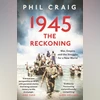
1945: The Reckoning: War, Empire and the Struggle for a New World
by Phil Craig
Published by Hachette
380 pages ₹899
Recent popular histories of World War II have focused on the war in Asia, where the post-war political trajectories of former colonial empires have been no less consequential than those in Europe. Those campaigns are an uncomfortable reminder that, whatever the evils of Nazi Germany, World War II was essentially a colonial contest, and the empires relied heavily on colonial troops to fight their good fight.
In 1945: The Reckoning, popular historian Phil Craig follows a track set by scholars such as Christopher Bayly and Tim Harper, Peter Clark and Mark Mazower. He rightly highlights the contradictions of the Atlantic Charter of August 1941. One of its key principles was the right to self-determination of all people to live in freedom from fear and want. The US understood this to mean a British commitment to give up her colonies; Churchill, unreconstructed imperialist, simply went along to secure American resources for Britain’s campaign against Germany.
Mr Craig follows the duplicitous endgame of European allies in their Asian colonies. As he writes, “Britain…fought hard and sometimes dirty to regain control of those parts of it that were temporarily taken over by its enemies.” Those retaken colonies ensured that export revenues didn’t bankrupt Britain either. Malaysia (or Malaya) is accorded a paragraph or two, which is odd, given that the British stayed on till the late fifties.
As with Finest Hour, his book on the Battle of Britain, Mr Craig has built this story through personal histories to bring to readers the experience of war by those who lived through it. This technique has some merit. Military historian Antony Beevor, for instance, has deployed it with success. But Mr Beevor’s work is undergirded by scholarship; Mr Craig’s conflation of the personal with the bigger picture has resulted in an uneven, if well told, history. He begins with portraits of two Indians whose life choices represented all the contradictions of the Raj. One is Kodandera Subayya Thimayya, “Timmy”, a loyal soldier of the British Indian Army, the only Indian to command an infantry brigade in battle during WW II and later chief of army staff in independent India. The other is Subhas Chandra Bose, the charismatic, controversial nationalist leader who chose to ally with Britain’s enemies Germany and Japan to gain freedom from British rule. With their help, he raised the Indian National Army (INA) from volunteers and Indian POWs. Ironically, one of INA’s stalwarts was Timmy’s brother, Ponnappa.
It is hard to see why Mr Craig has chosen to include in this mix the diary of a nurse who came to India looking for adventure. Details of her experiences in military hospitals and dalliances with British officers at parties are scarcely relevant. Instead, he could have examined memoirs recording the remarkable transformation of the Indian Army, after its headlong retreat from Burma, into an efficient fighting force that defeated the Japanese at the battles of Imphal and Kohima. This process was the turning point of the war in Asia but it finds fleeting mention here. More detail on Aung San, founder of modern Burma who allied with the Japanese for reasons similar to Bose, would have been a better addition than the effusions of a giddy girl.
There is another digression on an account by Bose’s aide Abid Hasan, aboard the U-180 sub carrying them to Japan, of the sinking of a British tanker. Hasan later wrote that as the tanker went down, British officers took the only proper lifeboat leaving light-weight second-rate rafts for Indian and Malaysian sailors. Mr Craig devotes two and half pages detailing why Hasan’s account was wrong, and the result of “confirmation bias” stemming from his implacable anti-British views. Probably true, but does this matter in the larger history?
The reader would have benefited also from a closer examination, available in recent scholarship, of how Britain fought to regain her Asian colonies and how the Indian Army under its British commanders helped the French and the Dutch reassert themselves in, respectively, Vietnam and Indonesia. Much of this is disposed of in sub-sections. The notable exception is a little-known diversion in Borneo — Operation Semut — where Australian Special Forces were involved in mobilising local tribes to provide intelligence on the Japanese. This, at least, was how the operation was presented to the Americans. The real intention was to keep the Americans off this resource-rich island in favour of the British. But the operation was a disaster — and the tribes bore the brunt of Japanese retribution.
Operation Semut was symptomatic of the profound betrayals by the Allied powers of the Atlantic Charter ideals. It is a pity Mr Craig did not write about similar betrayals of the Nagas, Kachins, Karens and others who performed yeoman’s service for the British in the India-Burma theatre against promises of self-determination. 1945: The Reckoning is not, as author Jane Caro gushes, “a brand new perspective on WW2”. Warts and all, it is, nevertheless, an important alternative history for readers groomed on Western war propaganda.




