Associate Sponsors

Co-sponsor

Mayyu Ali's memoir examines how innocuous processes can be political acts

Mayyu Ali's terrifying yet hopeful memoir makes one think about how seemingly innocuous processes like birth registration are loaded with political significance
book review
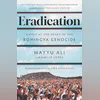
Eradication: A Poet at the Heart of the Rohingya Genocide
Chintan Girish Modi
5 min read Last Updated : Mar 04 2026 | 10:56 PM IST
Eradication: A Poet at the Heart of the Rohingya Genocide
By Mayyu Ali with Emilie Lopes (translated by Siba Barkataki)
Published by Pan Macmillan India
264 pages  ₹499
  Three months ago, while hearing human rights researcher Rita Manchanda’s petition alleging custodial disappearance of five Rohingya people and seeking transparency in procedures related to deportation, Chief Justice of India Surya Kant objected to her use of the term “refugees”. He pointed out that India has no obligation to keep someone who has entered the country illegally. 
He said, “If an intruder comes, do we give them a red carpet welcome?” This remark, regarded as dehumanising towards a persecuted religious minority from Myanmar, led to an open letter to the CJI. Signed by former judges, current advocates and the Campaign of Judicial Accountability and Reforms, it referenced India’s strong track record of extending humanitarian protection to people fleeing persecution in the neighbourhood. 
That said, India is not a party to the 1951 United Nations Refugee Convention. However, India has signed the Universal Declaration of Human Rights, the United Nations Convention on the Rights of the Child, and the International Covenant on Civil and Political Rights, so researchers and activists like Ms Manchanda argue that India does have international obligations to protect the human rights of non-citizens. This can be said to include the Rohingya population living in India. 
It is in this context that Indian readers must engage with Mayyu Ali’s terrifying yet hopeful memoir Eradication: A Poet at the Heart of the Rohingya Genocide. Born in 1991, he is a Rohingya poet-activist who grew up in the city of Maungdaw in Arakan, western Myanmar, and was forced to escape with his family to neighbouring Bangladesh in 2017, with over 7,40,000 Rohingyas. He applied for asylum in 2019, and migrated to Canada in 2021 with support from the United Nations High Commissioner for Refugees (UNHCR) and Amnesty International.
 
Co-authored with French journalist Emilie Lopes, the book was first published by Éditions Grasset & Fasquelle in French as L’Effacement in 2022. The Indian edition, published by Pan Macmillan, came out a few months ago. It is translated from French to English by Siba Barkataki, an assistant professor at the English and Foreign Languages University in Hyderabad. She specialises in Francophone literature, Indian indenture studies, and memory studies.
 
Readers who are new to the subject will find the linear narrative style easy to follow. This is a sound pragmatic choice on the author’s part because he needs to establish how things built up to this point. He never received his birth certificate, for instance, because a year after he was born, the military regime called the junta appointed border guards to combat illegal immigration. They refused to register Muslim newborns in Myanmar, insinuating that they belonged to Bangladesh.
 
This book makes one think about how seemingly innocuous processes of registration are loaded with political significance, determining access to citizenship and human rights.
 
Before full-fledged ethnic cleansing in a Buddhist-majority country, Rohingya Muslims were subjected to police searches, arbitrary taxation, land confiscation as well as religious discrimination. It is easy to draw parallels with how religious minorities elsewhere in the world are made to feel unworthy of dignity and led to believe that they are not entitled to human rights.
 
This book does not portray all Buddhists as extremists. It condemns only the likes of Ashin Wirathu, a monk who called for the boycott of shops run by Muslims, and spread propaganda depicting Muslim men as sexual predators who rape Buddhist women or force them into marriage and religious conversion. This is eerily similar to propaganda about the so-called “love jihad” in India, where Muslim men are assumed to be luring and deceiving Hindu women.
 
The blood-curdling descriptions of rape by soldiers are meant to get readers to wake up and speak out because the Rohingyas have endured too much for too long. Ali’s grief, and his profound disappointment with Aung San Suu Kyi, are heartbreaking because the Burmese leader, who was awarded the Nobel Peace Prize in 1991 for her nonviolent struggle against military dictatorship, failed in fulfilling her duty to Rohingyas in Myanmar. Her denial of crimes committed against them comes across as a betrayal to Ali. From being his childhood heroine, she transformed into the face of the genocide.
 
Interspersed throughout the prose are Ali’s poems. Together, they capture his sadness, rage, a demand for justice, and optimism for the future of Myanmar, despite death threats received from the Arakan Rohingya Salvation Army, an armed insurgency group in the refugee camps of Bangladesh. This book is his salute to the power of words to heal, repair and fuel resistance.
 
The reviewer is a journalist, educator and literary critic. Instagram/X: @chintanwriting

One subscription. Two world-class reads.

Already subscribed? Log in

Subscribe to read the full story →
*Subscribe to Business Standard digital and get complimentary access to The New York Times

Smart Quarterly

₹900

3 Months

₹300/Month

SAVE 25%

Smart Essential

₹2,700

1 Year

₹225/Month

SAVE 46%
*Complimentary New York Times access for the 2nd year will be given after 12 months

Super Saver

₹3,900

2 Years

₹162/Month

Subscribe

Renews automatically, cancel anytime

Here’s what’s included in our digital subscription plans

Exclusive premium stories online

  • Over 30 premium stories daily, handpicked by our editors

Complimentary Access to The New York Times

  • News, Games, Cooking, Audio, Wirecutter & The Athletic

Business Standard Epaper

  • Digital replica of our daily newspaper — with options to read, save, and share

Curated Newsletters

  • Insights on markets, finance, politics, tech, and more delivered to your inbox

Market Analysis & Investment Insights

  • In-depth market analysis & insights with access to The Smart Investor

Archives

  • Repository of articles and publications dating back to 1997

Ad-free Reading

  • Uninterrupted reading experience with no advertisements

Seamless Access Across All Devices

  • Access Business Standard across devices — mobile, tablet, or PC, via web or app

Topics :Supreme CourtBook readingBOOK REVIEWBS ReadsUnited NationsRefugees

Next Story



