The Broken China Dream: How Reform Revived Totalitarianism
Princeton University Press
Minxin Pei’s book The Broken China Dream: How Reform Revived Totalitarianism is a detailed account of how the limitations of the neo-authoritarian policies established under Deng Xiaoping provided an easy platform for Xi Jinping to reestablish neo-Stalinist rule. In Pei’s words, “Xi, a dogmatic Leninist, is the opposite of Deng, who was a pragmatic Leninist” but there are multiple similarities too — “a strong antipathy to liberal democracy, [that] only hard power can protect China from Western threats, liberal democracy as an existential threat and the US-led international order as illegitimate and unjust”.
The book argues that even with the similarities between the two leaders, there has been a “… systemic reversal of Deng’s foreign and domestic policies …. and Xi’s regime represents a fundamental break with Deng’s regime”. Pei explains this in detail using data and analysing various policy changes that Xi has adopted since 2012. He writes that “… the new political order under Xi’s rule rests on different pillars: centralised one-man rule built on personality cult, rule of fear through constant purges and repression, prioritisation of regime security over economic performance, revival of orthodox ideology and political rituals, and an expansionist foreign policy reinforced by a triumphant nationalist narrative — ‘the China dream’.” Xi has not adequately defined this dream, but Pei asserts that, “despite his political ruthlessness and his success in amassing power and making himself the most powerful ruler since Mao Zedong, Xi’s policies have put his ‘China Dream’ into serious long-term jeopardy”. He also predicts that “Xi’s version of a ‘China dream’ will not be fulfilled.”
Pei asserts that as Jiang Zemin and Hu Jintao were not strong leaders so meaningful resistance or challenge to Deng’s neo-authoritarianism did not surface during their tenures. Both Jiang and Hu shied away from formulating and implementing major policies necessary to address the cracks in the system, paving the way for the eventual dismantling of Deng’s neo-authoritarian ecosystem under Xi Jinping.
Pei’s book uses available information and known developments and CCP policies to trace the rise and fall of the neo-authoritarianism. It demonstrates how the rise of Xi was inevitable. As Pei writes, “The contradictions between Deng’s goals of institutionalizing the CCP and his aversion to any reforms that might weaken CCP power ultimately would render his reforms partial, ineffective, and short lived”. The rise of Xi Jinping and his narrative of “rejuvenation of the Chinese nation” underscores this argument.

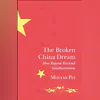 "The Broken China Dream: Minxin Pei's book charts Xi's inevitable rise")











