Mujib's blunders: Manash Ghosh's book reveals how Rahman lost plots

The Power and the Plot Behind His Killing, "covers the troubled years after the freedom struggle, popularly known as the Liberation War, against the genocidal Pakistan Army"
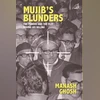
Mujib's Blunders: The Power and the Plot Behind His Killing
Mujib’s grant of amnesty on November 30, 1974 to all who were under trial or had been convicted, of war crimes and collaboration with the Pakistanis gave a huge boost to the Jamaat-e-Islami and its auxiliaries such as the al-Badr, al-Shams and Razaka
Hiranmay Karlekar
5 min read Last Updated : Sep 23 2025 | 12:02 AM IST
Mujib’s Blunders: The Power and the Plot Behind His Killing
by Manash Ghosh
Published by 
Niyogi Books
476 pages ₹795
 

Also Read

As Pinak Ranjan Chakravarty, a former High Commissioner of India to Bangladesh, points out in his foreword, Manash Ghosh’s Mujib’s Blunders: The Power and the Plot Behind His Killing, “covers the troubled years after the freedom struggle, popularly known as the Liberation War, against the genocidal Pakistan Army.” Obviously, the focus of any such book has to be Sheikh Mujibur Rahman — commonly referred to as Sheikh Mujib — an inspirational leader who spearheaded Bangladesh’s emergence as a nation, but became a victim of his own hubris. 
Mr Ghosh, who describes the proximate circumstances leading to Mujib’s assassination along with all members of his immediate family —sans daughters Hasina and Rehana who were abroad — and some members of his extended family, by a group of army officers, also shows that Mujib had by then lost quite a bit of his popularity and had become increasingly isolated within the Awami League. He also shows how Mujib himself was responsible for this. He failed to act to foil Khondaker Mostaq Ahmad’s launching of conspiracies to oust him, despite being aware of them. Another was his marginalisation of Tajuddin Ahmed, whom he made to resign his prime ministerial office. 
Mujib’s grant of amnesty on November 30, 1974 to all who were under trial or had been convicted, of war crimes and collaboration with the Pakistanis gave a huge boost to the Jamaat-e-Islami and its auxiliaries such as the al-Badr, al-Shams and Razakars; it led to the release of 30,000 supporters who promptly became politically active. Another blunder was the integration into the country’s civilian administration and fledgling military, of about 500,000 civilian and military personnel repatriated from West Pakistan at the end of the war, without screening them for their role during the Liberation War. Many of them, loyal to Pakistan, began sabotaging the government’s policies and measures, particularly the ones to deal with the floods and famine conditions devastating large parts of Bangladesh in 1974. 
Neither Mujib’s visit to Pakistan to attend the second summit of the Organisation of Islamic Cooperation in Lahore from February 22 to 24, 1974, nor Zulfiqar Ali Bhutto’s three-day visit to Dhaka from June 27 that year, yielded any significant result. The very fact that these were undertaken, however, gave a massive boost to the morale of pro-Pakistan elements gathered round the Jamaat-e-Islami and its auxiliaries, and enabled several repatriated officers from Pakistan, who had been given important positions in Bangladesh, opportunities to confer with their counterparts from Pakistan about ways to ensure Mujib’s ouster. 
Mujib was aware of the conspiracies being hatched against him but acted neither against those involved nor against Maulana Bhasani, who spearheaded a vicious campaign against him and India. He also ignored warnings by Indian officials and by Fidel Castro, who said during their conversation at the fourth summit of the non-aligned movement in Algiers in September 1973, that his enemies would get him if he was not tough with them. As Mr Ghosh suggests, Mujib’s compassionate nature and belief in the goodness of people, stood in the way of ruthless action, as did his belief that his popularity would never wane in Bangladesh and the question of his ouster or killing could never arise. Nor did he believe that he needed to enhance his security arrangements. His killers, therefore, had little trouble in executing their murderous mission. 
The assassination marked the end of one of the tallest leaders of his time, warts notwithstanding. It did not mark the end of Mr Ghosh’s narrative, which shifted to the events that followed: The coups and counter-coups; the killing of Tajuddin and three other important Awami League leaders — Syed Nazrul Islam, AHM Quamruzzaman, and Captain (Retd) Mansur Ali — in Dhaka Central Jail on November 3, 1975; the murder of Ziaur Rahman, who had made himself Bangladesh’s President and sought to consolidate his power through mass executions; and the many vicissitudes that Bangladesh experienced, culminating in the conspiracy, masterminded by foreign powers, that led to Sheikh Hasina’s ouster from power on August 5, 2025. Mr Ghosh has done well to highlight the important role that Tajuddin Ahmed, bureaucrat Nurul Kader and Major-General Khaled Musharraf played during the Liberation War and thereafter in Bangladesh, and the outstanding contribution by Subimal Dutt, India’s first high-commissioner to Bangladesh, in placing the ties between the two countries on a firm footing. These details are not generally known. Also, he has brought to his narrative his deep personal knowledge of Bangladesh’s post-Liberation politics and insights gained from his face-to-face interaction with most of the important dramatis personae. The result is a book that engrosses and informs. There are, however, a couple of avoidable slips. For example, the parliamentary election that Indira Gandhi lost was held in March 1977, and not 1976, as he states (pages 408 and 443). A bigger lacuna is the absence of an index, indispensable in the case of a book like this. 
 
The reviewer is a senior journalist and author of Bangladesh: The Next  Afghanistan  (Sage, 2005)   

One subscription. Two world-class reads.

Already subscribed? Log in

Subscribe to read the full story →
*Subscribe to Business Standard digital and get complimentary access to The New York Times

Smart Quarterly

₹900

3 Months

₹300/Month

SAVE 25%

Smart Essential

₹2,700

1 Year

₹225/Month

SAVE 46%
*Complimentary New York Times access for the 2nd year will be given after 12 months

Super Saver

₹3,900

2 Years

₹162/Month

Subscribe

Renews automatically, cancel anytime

Here’s what’s included in our digital subscription plans

Exclusive premium stories online

  • Over 30 premium stories daily, handpicked by our editors

Complimentary Access to The New York Times

  • News, Games, Cooking, Audio, Wirecutter & The Athletic

Business Standard Epaper

  • Digital replica of our daily newspaper — with options to read, save, and share

Curated Newsletters

  • Insights on markets, finance, politics, tech, and more delivered to your inbox

Market Analysis & Investment Insights

  • In-depth market analysis & insights with access to The Smart Investor

Archives

  • Repository of articles and publications dating back to 1997

Ad-free Reading

  • Uninterrupted reading experience with no advertisements

Seamless Access Across All Devices

  • Access Business Standard across devices — mobile, tablet, or PC, via web or app

Topics :Book ReviewsbooksBangladesh

Next Story



