Home / Book / Song of India: New book clarifies why Tagore composed the national anthem
Song of India: New book clarifies why Tagore composed the national anthem
Several songs competed to become India's anthem after Independence. Dr Mukherjee's book debunks myths about why Tagore composed his song and how it came to be chosen
5 min read Last Updated : Sep 16 2025 | 10:45 PM IST
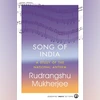
Song of India: A Study of the National Anthem
by Rudrangshu Mukherjee
Published by Aleph
86 pages ₹399
At a time when the idea of India as a pluralist society is being questioned in certain circles, a book explaining the basic premise of the country’s national anthem is appropriate. More importantly, such a book serves as a timely reminder of the principles of harmony and unity in diversity, enshrined in a song that Rabindranath Tagore composed in December 1911 and which was adopted as India’s national anthem in 1950.
With this short book under review, eminent historian and academic Rudrangshu Mukherjee has achieved much more by making a commendable contribution to our overall
understanding of India’s national anthem. He places the song in the context of Tagore’s vision of nationalism and his enunciation of the role and importance of destiny and harmony. What’s more, Dr Mukherjee demolishes certain myths about why Tagore composed this song even as he brings to light several interesting developments that led to its choice as the national anthem.
Quite a few songs vied with one another to become India’s national anthem after independence. The three-day session of the Indian National Congress, held in December 1911 in Calcutta, will be remembered for three songs being played on different days. On the first day, it was Bankim Chandra Chattopdhyay’s Vande Mataram, followed by Tagore’s Bharoto Bhaagyo Bidhaataa (the book, however, refers to Tagore’s song as Jana Gana Mana, which was not the title that the poet gave) on the second day, and Sarala Devi’s Namo Hindustan on the third. There was another song that could claim to become India’s national anthem — Tarana-e-Hindi, written by Allama Iqbal and which began with that immortal line — Saare Jahan Se Accha, Ye Hindoostan Hamara.
Dr Mukherjee’s book does not examine in detail the competing claims of these songs to become India’s national anthem, although he points out a few similarities between the themes of Tagore’s song and those of Bankim Chattopadhyay and Sarala Devi. But he sticks to the book’s brief and focuses on how the first stanza of Tagore’s song secured the Constituent Assembly’s approval as India’s national anthem at its last session on January 24, 1950.
Developments that took place before that decision was taken, however, are startling. Even before it was adopted as the national anthem, Tagore’s song had claimed that status de facto. The first stanza, set to music by Tagore himself, was played at the General Assembly of the United Nations in August 1948 after its insistence that a new-born nation must be identified with its national anthem. What Rajendra Prasad announced on January 24, 1950, as President of the Constituent Assembly, was perhaps formalising a decision that had been taken in principle.
The irony of this becomes obvious when Dr Mukherjee reveals that Tagore himself may not have regarded the first stanza as India’s national anthem. Jawaharlal Nehru had requested Tagore to compose a national anthem for India. “Tagore had partly agreed” to that idea. But the poet died soon after in August 1941 and with that died the idea of a new song from Tagore that could be India’s national anthem. It is also remarkable that Nehru and Subhash Chandra Bose agreed on the question of Bharoto Bhaagyo Bidhaataa as India’s national anthem. In 1942, Bose had adopted the song as the national anthem and Nehru followed that up in 1948 at the United Nations, with the Constituent Assembly giving its seal of approval in January 1950.
Dr Mukherjee has also done well to have conclusively set at rest doubts on who Tagore tried to celebrate in Bharoto Bhaagyo Bidhaataa. Debunking a popular myth that Tagore wrote this song to honour King George V, he has cited evidence to show that such suggestions were canards. Indeed, soon after the Congress session, the song was published in January 1912 in Tattvabodhini Patrika, a journal edited by Tagore at that time, espousing the cause of the Brahmo Samaj. No surprise, Bharoto Bhaagyo Bidhaataa was classified there as a Brahmo Sangeet.
Apart from a short introduction to Tagore’s evolution as a poet and philosopher, the book explains in detail the five stanzas of Bharoto Bhaagyo Bidhaataa, only one of which is used as the national anthem. But understanding the entire song, in particular the second stanza, does help situate the idea of the dispenser of destiny as a positive force behind the nation’s evolutionary journey in preserving a pluralist society with universal harmony. That understanding has been enhanced by Dr Mukherjee’s thoughtful inclusion of the entire text of one of Tagore’s poems, Bharat Tirtha, which dwelt on a similar theme of the plurality of Indian civilisation.
The book’s appeal has been enhanced by a page on the song’s musical notation and a quick response (QR) code at the end, clicking which readers can enjoy Tagore’s own rendering of the first stanza of Bharoto Bhaagyo Bidhaataa. Equally useful is the inclusion of the English translation of the song along with the publication of the original version in Roman, Devnagari and Bangla scripts, although an important line in the fourth stanza is missing in the Bangla version due to an avoidable printing error.





