Home / Book / Searches: Book explains how we turned to internet to understand ourselves
Searches: Book explains how we turned to internet to understand ourselves
The strength of Searches, despite its banal moments, lies in the breathing space allowed to each digital experiment without judgments or definitive conclusions
5 min read Last Updated : Nov 11 2025 | 10:35 PM IST
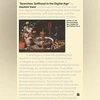
Searches: Selfhood in the Digital Age
by Vauhini Vara
Published by HarperCollins
252 pages ₹599
In Searches: Selfhood in the Digital Age, Vauhini Vara turns the most ordinary act of typing into a search bar into a mirror of modern identity. A Stanford graduate who came of age amid Silicon Valley’s early boom, she built her career reporting on the rise of Amazon, Google, and Facebook for The Wall Street Journal, The New Yorker and Wired. Yet in this book, she shifts from covering tech empires to examining how they have shaped her life. Born in 1982, Ms Vara was the first generation to grow up alongside the internet’s expansion. Her essays chronicle this convergence of curiosity migrating online, and convenience turning into dependency. She asks, persistently, what does it mean to have a self when every aspect of it can be searched and simulated?
Ms Vara begins by narrating her use of early chatrooms and Yahoo search as safe spaces for questions she couldn’t bear to ask anyone on subjects such as the colour of her skin and, later, her sister’s Ewing sarcoma diagnosis. This is not to say that her queries were met with a million search results as it might today. She writes, “The truth is that before content exists, there were people like me who, through the act of searching, communicated a desire for answers. That is, for content.”
Searches defies categorisation. It is part memoir and part experiment in machine-assisted storytelling. It carries engrossing essays by Ms Vara, connecting her sense of identity to her work covering digital media. She situates her vulnerable moments with significant changes in the growing world of Amazon, Alphabet, and Apple. She draws a self-portrait by listing her decade-long Google search history alphabetically. This is akin to looking at Facebook memories today, although a more abstract version of it, that remind us of who we have been over the years. The list however, loses the reader’s attention. A similar reading experience takes place when she lists her Amazon reviews that are less about the products and more about the moral justification of the purchase — reliable delivery and getting a good deal.
After every few chapters, she asks ChatGPT to review her work. At first, the feedback is tedious and worth skimming through. Then Ms Vara queries ChatGPT about its usage of language, which it claims to be inclusive and empathetic to build a good relationship with its user. When she asks it to list a group of female POC (persons of colour) artists, it lists male artists and even creates a fake one. In her feedback to the search results, Ms Vara calls out the wrong results, approaching it with open curiosity rather than dismissive rejection. To the reader, when this banal AI content is juxtaposed with the author’s brilliantly nuanced, emotionally driven essays, it becomes clear that AI cannot replace what humans bring to their writing.
In 2021, Ms Vara published an essay on the grief of losing her sister in The Believer. It went viral. She prompted GPT-3, an early version of ChatGPT, to complete the piece. It created scenarios that had never occurred, including a romance. Ms Vara edited and rewrote it with every attempt. She writes, “The machine-generated falsehoods compelled me to assert my own consciousness by writing against the falsehoods.” She admits, however, that the most beautiful line in that essay was written by GPT-3, and it had never happened. Despite the fictionality, it moved her. What else can it write, she wondered. She confesses that she expected to be reprimanded online and was shocked to learn that AI was being taught in creative writing classes. Ms Vara’s experiments intricately tie loss and language, even visually. When privacy and excessive digital footprints are a matter of concern, she wonders if people —such as her late sister — will be remembered without significant footprints online. Her question ignites a moral dilemma: What about our lives outside the internet or our conscious choice to upload self-images for the world to see?
Here she briefly introduces her friend Sanam and her husband, an author. The former buys strictly local, rejecting Amazon, claiming that her upper-middle class income allows her to choose to stand with her ethical values against the large corporation. The latter owned a smartphone only in 2023 and hasn’t yet fallen prey to doomscrolling. By juxtaposing her inclination for ease and convenience against those who make conscious choices outside of the internet, Ms Vara successfully showcases the moral and ethical dilemmas lingering on the margins of our digital experiences.
The strength of Searches, despite its banal moments, lies in the breathing space allowed to each digital experiment without judgments or definitive conclusions. Ms Vara begins with the private and ends with the collective, recording responses of a survey to see how people understand themselves with their past, present and future. In the end, the book leaves the reader with an undeniable reality: To know ourselves, we outsource curiosity to machines.
The reviewer is an independent writer based in Sambalpur, Odisha. Instagram/X: @geekyliterati




