Believer's Dilemma: A leader's struggle with power and self-doubt

A new biography unravels Atal Bihari Vajpayee's complex persona, tracing his political journey, inner conflicts, and role in shaping modern Indian politics
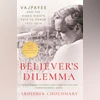
Believer's Dilemma: Vajpayee and the Hindu Right's path to power 1977-2018
Believer’s Dilemma: Vajpayee and the Hindu Right’s path to power 1977-2018
Aditi Phadnis
5 min read Last Updated : Sep 09 2025 | 10:57 PM IST
Believer’s Dilemma: Vajpayee and the Hindu Right’s path to power 1977-2018
By Abhishek Choudhary
Published by Picador India
453 pages  ₹999
  All politicians are complex, but this outstanding book attempts to deconstruct the personality, life and times of one of the most complicated individuals to have become India’s Prime Minister. That Atal Bihari Vajpayee was considered the “right man in the wrong party” is an overdone cliché. The book explores the restlessness of a personality who played a pivotal role in insinuating a new way of thinking into power politics and the Indian system — all the time racked by self-doubt. 
This is a sequel to an earlier book where the author traces Vajpayee’s beginnings but ends that volume at 1977 when the Jana Sangh formally joined the central government with Vajpayee as minister of external affairs. However, the volume stands alone successfully as it picks up the thread from 1977 and charts out how India arrived at its present political moment. It covers the years from the Janata Party’s installation as the first non-Congress government until Vajpayee’s final vote against the Indo-US civil nuclear agreement in 2008. The preface covers the later years. 
The book is valuable at many levels. In telling the story, the author has interviewed many friends and associates of Vajpayee who are no longer with us: Appa (NM) Ghatate, the lawyer whom Vajpayee counted as one of his closest friends; Madhu Deolekar, who explained the complexity of the relationship between the Rashtriya Swayamsevak Sangh (RSS) and the Janata Party, the contradiction finally emerging as the proximate reason for the unravelling of the Janata Party; and Devendra Swarup, who was a historian of the RSS. All these people have died recently and the author was fortunate in recording their testimony as they were witnesses and primary sources to crucial events in Vajpayee’s life. Now in their 90s, Nayantara Sahgal who sheds new light on Vajpayee’s lifelong companion, Rajkumari Kaul; Eric Gonsalves, former ambassador, and others also speak in the book. 
Also of great value are the new facts the book brings to light. With confidence,  Abhishek Choudhary asserts in the book that the never-married Vajpayee had a biological daughter. This is the first time this has been cited as a fact, though there has been tittle-tattle about Vajpayee’s personal life. The author has also recorded the many occasions that Vajpayee considered leaving the Jana Sangh/Bharatiya Janata Party altogether and forming a new party. An exposition of the relationship between L K Advani and Vajpayee — both when in power and out of it — is frustratingly brief and actually merits another book. Vajpayee’s distancing from the Advani-led Rath Yatra, even his mockery of it, and then, having to defend the Babri Masjid demolition is one aspect of the relationship. But then there’s the “elevation” of Mr Advani as Deputy Prime Minister, the action itself illustrating the power struggle that was on in the background in the government. 
The book explains expansively, the prevailing circumstances of Vajpayee’s tenure as foreign minister and concludes that it was not just dual membership of the RSS that led to the demise of the Janata Party but that leaders like Morarji Desai did not sufficiently appreciate or accommodate the middle castes, represented by Charan Singh. This feeling of denial would later explode as the Mandal controversy, lead to the emergence of caste and social justice as an organising political principle and push the BJP towards Mandir as Advani tried to avoid the pitfalls caste represented for the organisation. 
As Prime Minister, Vajpayee had to deal with many threats — ranging from the very stability of the government to his own belief system. RSS leader Dattopant Thengadi’s mobilisation of opinion against the economic philosophy (such as it was) of the Vajpayee government would lead Arun Shourie to describe the BJP as “Congress plus a cow”. It also makes you wonder whether the Hindu “Right” is an accurate description for the party. And many today who feel Operation Sindoor was a lost opportunity in blasting Pakistan off the face of the earth would wonder why Vajpayee let go of the opportunity when he had it, by telling the Cabinet Committee on Security when the Kargil war broke out. “Please don’t cross the LoC. No, no crossing the LoC,” the author quotes him as saying in the book. A section on Vajpayee’s relationship with Narendra Modi is illuminative. 
There are a couple of minor factual errors in the book. Yashwant Sinha was never an MLA so he could not have resigned from leadership of the Opposition in Bihar in the wake of the hawala scandal. In the preface, the author writes about 2008: “India got its first minority prime minister”: “minority” as in religious? That was in 2004. Numerical? That happened even earlier.  It is not clear. But all this is trivial. The book is a detached and thorough exploration of the actual working of Hindutva in power politics, mandatory reading for all those who want to understand India.  

One subscription. Two world-class reads.

Already subscribed? Log in

Subscribe to read the full story →
*Subscribe to Business Standard digital and get complimentary access to The New York Times

Smart Quarterly

₹900

3 Months

₹300/Month

SAVE 25%

Smart Essential

₹2,700

1 Year

₹225/Month

SAVE 46%
*Complimentary New York Times access for the 2nd year will be given after 12 months

Super Saver

₹3,900

2 Years

₹162/Month

Subscribe

Renews automatically, cancel anytime

Here’s what’s included in our digital subscription plans

Exclusive premium stories online

  • Over 30 premium stories daily, handpicked by our editors

Complimentary Access to The New York Times

  • News, Games, Cooking, Audio, Wirecutter & The Athletic

Business Standard Epaper

  • Digital replica of our daily newspaper — with options to read, save, and share

Curated Newsletters

  • Insights on markets, finance, politics, tech, and more delivered to your inbox

Market Analysis & Investment Insights

  • In-depth market analysis & insights with access to The Smart Investor

Archives

  • Repository of articles and publications dating back to 1997

Ad-free Reading

  • Uninterrupted reading experience with no advertisements

Seamless Access Across All Devices

  • Access Business Standard across devices — mobile, tablet, or PC, via web or app

Topics :Atal Bihari VajpayeebiographyHindutvaKargil warBOOK REVIEWBook readingBS Readsindian politics

Next Story



