AMERICAN REICH: A Murder in Orange County, Neo-Nazis, and a New Age of Hate
By Eric Lichtblau
Published by Little, Brown
340 pages $30
Elon Green
Writing a book of investigative nonfiction is a leap of faith for the writer and publisher. Conservatively calculated, a minimum of several years is demanded of such a project, as it often requires numerous interviews, sifting through countless pages of legal documents and months of fact-checking. The author has no notion whether the work that has eaten up nights and weekends will be timely upon publication. Or, indeed, if that’s even desirable.
The author of a book about, say, the 2018 murder of a queer Jewish teenager by a neo-Nazi might prefer that it be published at a time when such violence seems like a relic of a less enlightened era, and not when conservatives express affection for Adolf Hitler, LGBTQ Americans are under constant attack and anti-semitic crime seems increasingly routine.
At the heart of Eric Lichtblau’s deeply reported American Reich is the intersecting story of a victim and a perpetrator. Blaze Bernstein was a slight, precocious student at the University of Pennsylvania with a fondness for literature and poetry. By then, he had become comfortable with his homosexuality, but that hadn’t always been the case. In high school in Orange County, Calif., he thought he might be gay or bisexual. Either possibility, though, left him vulnerable in a place that Lichtblau describes as “a petri dish for young white supremacists anxious to take back their culture from minorities.”
Bernstein’s narrative counterweight is Sam Woodward, a white supremacist and a former classmate at Bernstein’s high school, which attracted artistic-minded students. Woodward was raised in a household of intolerance, by a father concerned that the school’s “homosexuals” might “convert” his son. The portrait of Woodward verges on cliché, which speaks more to the simple-mindedness of neo-Nazis than to any fault of Lichtblau’s writing. There’s the Confederate flag hung over Woodward’s bed; the digital “diary of hate,” in which he vented his hatred; and the narrow artistic vision that encompassed Nazi-themed sketches. On one such sketch, of a blood-soaked knife and a skull, he’d written: “Text is boring but murder isn’t.”
This was no idle observation. Woodward was a member of Atomwaffen Division, a neo-Nazi group that rose from the muck of online forums and used the election of America’s first Black president as a recruitment tool. Its founder, who studied nuclear physics at the University of South Florida — Atomwaffen is German for “atomic bomb” — looked for fellow travellers with a desire for violence. Despite plastering fliers advertising the group on college campuses, members tended to be uneducated. Woodward, claiming an IQ of 121, was “considered a real thinker.” He put his prodigious intelligence toward reading any fascist literature within reach.
Woodward’s political beliefs weren’t news to Bernstein. It did, then, seem odd when, a year or so after they graduated from high school, Woodward started sending flirtatious messages to Bernstein. Hooking up with Woodward would be “legendary,” Bernstein told a friend. And so, when the white supremacist, armed with a folding knife, proposed that they catch up at a park over winter break, the young Jewish man agreed. Bernstein never came home.
Lichtblau, a former New York Times reporter and the author of two prior books about Nazis, has done an admirably vivid job of situating Atomwaffen amid a landscape of like-minded groups — not just the Ku Klux Klan, but the more obscure seedbeds of white supremacy as well, including Blue-Eyed Devils, a band whose signature song was the imaginatively titled “White Power”; online forums such as Iron March, whose slogan reads, in part, “Race War Now! 1488 boots on the ground!”; and the Rise Above Movement, whose members were represented at the infamous Unite the Right rally in Charlottesville, Va., in 2017.
Looming over these factions is a hero of Woodward’s: Donald Trump. Lichtblau adeptly charts the sustained fallout from Trump’s first successful presidential campaign, which began in 2015 and in whose wake hate crimes, on the wane for years, have soared.
Lichtblau catalogues a litany of bloodshed: Asian and Hispanic shoppers murdered at a Texas mall; a massacre of queer clubgoers in Colorado Springs; the shooting of Jews at a Pittsburgh synagogue. In the years leading up to Bernstein’s death, Woodward and his compatriots were in thrall to Trump, taking his words as a tacit endorsement to kill.
Lichtblau’s decision to contextualise the murder is ultimately a weakness. There are long stretches of American Reich where Blaze Bernstein simply disappears. This is perhaps a consequence of the inherent difficulty in reporting extensively on young people; there simply isn’t a full life’s worth of material to mine.
This is a quibble, and it does not undermine Lichtblau’s achievement. American Reich is queasily of the moment, and evokes our present reality with frightening detail. One can only hope that someday its subject is relegated to the past.
The reviewer is the author of The Man Nobody Killed: Life, Death, and Art in Michael Stewart’s New York ©2026 The New York Times News Service

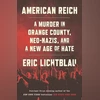 "American Reich explores the culture of hate in US' far-right groups")

