Waste Wars: How rich nations legally dump toxic waste on poor countries

How the rich world exploits loopholes to legally dump toxic waste on poor nations in Asia, Africa and South America
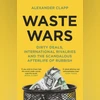
Waste Wars: Dirt Deals, International Rivalries and the Scandalous Afterlife of Rubbish
Kanika Datta
5 min read Last Updated : Oct 29 2025 | 10:52 PM IST
Waste Wars: Dirt Deals, International Rivalries and the Scandalous Afterlife of Rubbish 
by Alexander Clapp 
Published by Hachette
390 pages ₹799  The cover blurb by historian Adam Tooze describes Waste Wars as a “mind-altering and unforgettable read”. That could as well be a statutory warning. Waste Wars is a bleak expose of the lethal consequences of globalisation and its end-product — garbage. As author Alexander Clapp establishes at the start, “You are currently living in a world in which the human ability to create garbage — or eventual garbage — has surpassed Earth’s ability to generate life.”
 
The creation of waste, he writes, quoting Vance Packard, who wrote the seminal 1957 book The Hidden Persuaders, is rooted in “growthmanship,” a post-World War II American legacy of measuring prosperity by increases in economic output. 
 
“Growthmanship”, thus, entails forced consumption — selling more and more products manufactured with increasing efficiency by “artificially stimulating” consumers into buying new things. Thus, as Mr Clapp writes, “whether it was a poncho or a Pontiac, the result was much the same. Increasing prosperity required increasing outputs of waste”. “Growthmanship” produced our throwaway society where products are manufactured for rapid obsolescence, creating a global environmental and human rights crises.
 
Waste and its afterlife is a topic Western journalists have recently discovered. In 2023, journalist Oliver Franklin-Wallis’s Wasteland: The Dirty Truth About What We Throw Away, Where it Goes and Why it Matters outlined the global dimensions of the waste business.  Having similarly travelled the continents and interviewed activists and victims and millionaires of this burgeoning global business, Mr Clapp demonstrates in harrowing reportorial detail how garbage disposal is becoming a new form of colonialism imposed on the Global South.
 
The loopholes through which this business thrives are asymmetric environmental laws and poverty that enable the developed world to “legally” send its toxic chemical and electronic waste and household garbage to Africa, Asia and South America. These countries often choose to accept garbage from the Western world in return for promises of investments in the name of development — and often pay-offs for Third World Politicians. Africa was one prime location for toxic industrial waste for precisely these reasons until banned by a convention that took effect in 1988. But it is unclear whether all countries enforce this ban.  
 
For instance, Mr Clapp takes us to dirt-poor Benin, a former French colony that agreed in 1988 to take in radioactive and industrial waste in return for a down-payment of $1.6 million and 30 years of debt relief. Its president planned to bury the toxic waste on the outskirts of the village of a rival. The deal fell through after it was exposed by French media but Mr Clapp speculates that its president may well have concluded underhand deals to import toxic waste after $300 million was discovered in various Swiss bank accounts.
 
Toxic waste can also come in legitimately as part of a recycling industry that is becoming increasingly fundamental to margin-conscious consumer electronics and steel conglomerates. In Ghana, a desolate town with a name that could do duty in Gulliver’s Travels, Agbogbloshie, has become the centre of a trade that dismantles electronic equipment sent via charitable networks from the United States and America ostensibly to “empower” Ghanaians. This brisk trade was fuelled by the immiserisation of Ghana, following a collapse of world cocoa prices followed by a draconian International Monetary Fund privatisation programme.
 
This “business” creates two income streams. One is for the Ghanaians who dismantle, for a pittance and without basic safety equipment, these devices and extract the precious metals — gold, silver, copper, palladium, aluminium, rare earths — that are sold to the world’s largest electronics manufacturers for reuse. The plastic that is extracted is burnt in enormous bonfires, a daily ritual that bestows on hapless workers chronic pulmonary and heart disease and early deaths.
 
Meanwhile, “educated” Ghanaians get to abstract SIM cards from these “charitable” devices and set up businesses to lure people with fake schemes. A variation of the infamous “Nigerian Prince” scam, Ghana’s stock favourite is creating online profiles of alluring young women to bait frustrated American men into opening their wallets. Mr Clapp shows how this informal waste economy is also the backbone of Israel’s vaunted startup culture. Here the “beneficiaries” are Palestinians, for whom dismantling discarded electronic equipment has become a lifeline as Israel encroaches on their lands.
 
Mr Clapp takes particular aim at plastics that are being produced and discarded at deleteriously alarming levels, creating “trash economies” that impact the world’s poorest and most vulnerable. He exposes the double standards in Europe where plastics discarded in recycling bins end up in emerging “plastic” towns in Indonesia that sprang up once China stopped accepting the world’s plastic waste, or simply burnt on swathes of arable land and orchards in Turkey, Europe’s “Third World”.
 
The unrelentingly dystopian world that Mr Clapp exposes in page after page makes this book a difficult read. None of this may shock Indians who, unlike Western consumers, witness the consequences every day in our urban backyards. But we are unlikely to be insulated from the trends Mr Clapp discusses. With breaks, though, Waste Wars is worth picking up. As journalist Misha Glenny says, “If you wish to know how the world really works, read this book.”

One subscription. Two world-class reads.

Already subscribed? Log in

Subscribe to read the full story →
*Subscribe to Business Standard digital and get complimentary access to The New York Times

Smart Quarterly

₹900

3 Months

₹300/Month

SAVE 25%

Smart Essential

₹2,700

1 Year

₹225/Month

SAVE 46%
*Complimentary New York Times access for the 2nd year will be given after 12 months

Super Saver

₹3,900

2 Years

₹162/Month

Subscribe

Renews automatically, cancel anytime

Here’s what’s included in our digital subscription plans

Exclusive premium stories online

  • Over 30 premium stories daily, handpicked by our editors

Complimentary Access to The New York Times

  • News, Games, Cooking, Audio, Wirecutter & The Athletic

Business Standard Epaper

  • Digital replica of our daily newspaper — with options to read, save, and share

Curated Newsletters

  • Insights on markets, finance, politics, tech, and more delivered to your inbox

Market Analysis & Investment Insights

  • In-depth market analysis & insights with access to The Smart Investor

Archives

  • Repository of articles and publications dating back to 1997

Ad-free Reading

  • Uninterrupted reading experience with no advertisements

Seamless Access Across All Devices

  • Access Business Standard across devices — mobile, tablet, or PC, via web or app

Topics :Book ReviewsBooks and novelsbooks

Next Story



