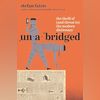
UNABRIDGED: The Thrill of (and Threat to) the Modern Dictionary
by Stefan Fatsis
Published by
Atlantic Monthly
397 pages $30
By Dan Piepenbring
It’s intoxicating to be in the dictionary. Sometimes, when I Google myself, I get a cheap thrill from finding my name on Merriam-Webster’s website, where the “Recent Examples on the Web” section displays sentences I have no memory of writing. There I am, illustrating unimpeachable usage of “sweatshop,” or “Antichrist,” or “vainglorious.”
Which is apt: The sample sentences are “automatically compiled from online sources,” and regularly replaced. But it’s as close as I may ever come to being cast in bronze.
With some envy, then, I report that the journalist Stefan Fatsis has written actual definitions for more than a dozen words in the Merriam-Webster.com Dictionary, including “alt-right,” “burkini” and “microaggression.”
Fatsis had no prior lexicographic training. He accomplished his feat the old-fashioned way: by cozying up to the right people. To write his engaging new book, Unabridged, he spent years haunting Merriam-Webster’s headquarters in Springfield, Massachusetts.
He’d hoped to chronicle the company’s long-awaited overhaul of its online unabridged dictionary, the first major undertaking since Webster’s Third New International Dictionary of the English Language, Unabridged appeared in 1961. Ominously, that revision never coalesced.
Instead, Fatsis’ residency, which began in 2014, overlapped with a period of dramatic retrenchment. As Fatsis combed through its ancient filing cabinets and asked the big questions — How should a dictionary be? Who is it for? — Merriam-Webster was beset by layoffs. The more convinced he became that the dictionary was a vital institution, the more perilous its future appeared.
Then again, lexicography has always been a shaky enterprise, its economics uncertain, its controversies all but constant. Noah Webster Jr., the Yalie Federalist who dubbed himself “the prophet of language to the American people,” was “arrogant, argumentative, snobby and complicated,” Fatsis writes — charges levelled at his eponymous dictionaries from the first. In 1806, Webster issued the Compendious Dictionary of the English Language, which earned tepid reviews and poor sales; it proposed the spelling “opake,” which didn’t catch on, and “draught,” which did.
He toiled for decades on a more official debut, 1828’s American Dictionary of the English Language, which boasted 70,000 entries over nearly 2,000 pages. He felt that his labours justified the $20 price tag (about $660 today).
After Webster died, in 1843, George and Charles Merriam bought the rights to the dictionary and set about making it more affordable, more rigorous and less idiosyncratic — to the chagrin of Webster’s son, who worried that standardisation would tarnish the family legacy.
Instead, Webster became a household name, rising steadily in esteem until the early 1960s, when the notorious Webster’s Third arrived like a brick through a window. The crux of the issue was “ain’t,” which was now in the dictionary. Thus ensued a season of pearl-clutching among the nation’s purists and pedagogues. This newspaper called the Third “disastrous,” as it reinforced “the notion that good English is whatever is popular.”
As Fatsis points out, this hand-wringing required wilful misreading. Critics ignored the raft of monitory labels that accompanied “nonstandard” or “substandard” words like “irregardless.”
“Usage makes language,” as a reader wrote in the Third’s defense, and inclusion in the dictionary is never tantamount to endorsement — but good luck convincing the prescriptivists of that.
Fatsis provides an excellent primer on Merriam-Webster’s role in the culture wars, with thorough accounts of the dictionary’s approach to the N-word, the F-word, “Covid-19” and “woke.” He writes, too, of words lost to time, like “tenigue” (a fusion of “tension” and “fatigue” that may yet catch on) and the American Dialect Society’s first-ever Word of the Year, “bushlips” (“insincere political rhetoric,” after George H W Bush’s ill-fated “Read my lips” promise).
But maybe the most evocative word is one for which Fatsis contributed the definition: “sheeple,” or “people who are docile, compliant or easily influenced.”
Merriam added it in 2017, along with a sample sentence Fatsis had found in a CNN review of an iPhone accessory that “the sheeple will happily shell out $99 for.” The sheeple were outraged by this selection, which showed “complete disrespect,” one wrote, “to people who use Apple’s technology to enrich their lives.” In the case of Merriam versus one of the largest corporations in the world, the dictionary was somehow construed as the Goliath to Apple’s David.
All of which is to say that Merriam’s role in American society is privileged but tenuous. We ask the dictionary to serve as both the authoritarian father and the laid-back uncle, but we bridle if it settles too comfortably into either role. We prefer to see it not as the work of a group of dedicated, fallible professionals, but as a totem, immutable and yet adaptable, a book that writes itself.
Fatsis’ history is charmingly told, even if his miscellaneous approach means the book sometimes loses its centre. Its best passages deal with Merriam office life: a debate over the coarser meaning of Dutch oven or a wistful potluck lunch for a retiring colleague. But my only real objection concerns “thereby,” which Fatsis says writers should “never use” — a strong note of censorship from someone who deploys both “on fleek” and “wut.” I’ve used “thereby” in this very publication, and I would do it again. It’s in the dictionary.
The reviewer is the co-author of Chaos: Charles Manson, the CIA, and the Secret History of the Sixties
©2025 The New York Times News Service


 "Wut's in a word? A new book spells out the threats to the dictionary")

