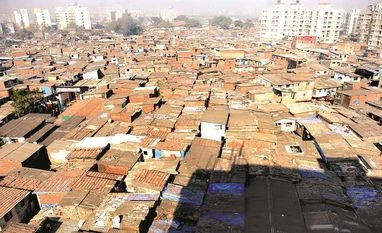
The Dharavi Redevelopment Project (DRP) will begin the review of the documents of survey conducted on 70,000 tenements of the residential colony in Mumbai, a process which will take the rehabilitation of the dwellers a step closer to reality.
Under the Slum Rehabilitation Authority (SRA) guidelines, only ground-floor tenements are typically considered eligible for free housing. According to the project’s tender document, residents with ground-floor residential structures built on or before January 1, 2000, will get homes of 350 square feet (sq ft) within Dharavi only. This is 17 per cent more than any other SRA project in Mumbai.
The review will be conducted on the documents submitted by April 15, 2025, the extended deadline given to those who missed the earlier survey cut-off date.
According to the latest data, nearly 100,000 structures have been physically mapped. And out of it, about 70,000 households have been surveyed.
About 94,500 have been given unique identification numbers, around 89,000 have been digitally mapped using LiDAR technology.
The survey is being conducted to determine the eligibility of the residents and businesses of Dharavi for rehabilitation, considering the redevelopment of the area.
A DRP deputy collector in charge of the survey said, “We are now preparing the Draft Annexure-II based on documents received from areas where the household survey has been fully completed. Those who chose not to take part in the survey will be listed as ‘documents not received’ in the Draft Annexure-II.”
The draft Annexure II will be prepared by DRP. It’s a part of the eligibility verification process, a regulation for the Slum Rehabilitation Authority (SRA) project.
The door-to-door survey will, however, continue in areas where tenements have been numbered and door-to-door inputs have not been taken yet.
“The survey is still on in some pockets to ensure every Dharavikar is included in the redevelopment. This is a housing-for-all project, and the government wants no one to miss out on its benefits,” he said.
“Those who have not opted to be numbered nor have expressed their intention officially to be included would be assumed to be illegal tenements and would be dealt with accordingly,” the officials added. As per the project's tender document, residents with ground-floor residential structures built between January 1, 2000, and January 1, 2011, will be eligible for 300 sq ft homes outside Dharavi for ₹2.5 lakh under the Pradhan Mantri Aawas Yojana (PMAY). Residents with upper-floor structures and the structures that exist after January 1, 2011, are ineligible to get homes in Dharavi. Such ineligible residents will get rental accommodation of 300 sq ft outside Dharavi.
Besides, the Navbharat Mega Developers (NMDPL), a special purpose vehicle formed as a joint venture between the government of Maharashtra and the Adani Group, is preparing to construct nearly 150,000 tenements because most hutments have grown vertically to G+2 levels, increasing the number of tenements needing rehabilitation.
Additionally, the Adani Group has an 80 per cent stake in the NMDPL, while the remaining 20 per cent stake belongs to the state government.
Recently, the Supreme Court sought a response from the Maharashtra government and Adani Properties on a plea challenging the award of the project.
The plea, filed by UAE-based SecLink Technologies, challenged the state government’s decision to cancel SecLink’s 2019 bid for the redevelopment of Dharavi slums that are spread across 600 acres and award the tender to Adani in 2022.
However, the apex court refused to halt the ongoing work at the project site after Adani Group said that the construction had already started and over 2,000 workers were involved in it.
They also told the court that they had invested funds, procured construction equipment worth crores of rupees, and started the demolition of railway quarters on the site.