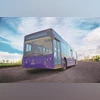
Electric buses (e-buses) will make up half of JBM Auto’s India business by 2026-27 (FY27), company’s vice-chairman and managing director, Nishant Arya, told Business Standard in an interview. The company has an order book of more than 10,000 e-buses which it hopes to deliver in the next two years, Arya added. The company received an order size of around 6,300 in 2023-24 (FY24).
E-buses account for 35 per cent of JBM Auto’s revenue at present. The company, a key player in India’s automotive sector, particularly in the e-bus segment, has a 30-40 per cent market share in the country.
A total of 3,314 e-buses sold in India in 2024-25 (FY25) down from 3,516 in FY24. JBM Auto and JBM Electric sold 379 e-buses in FY25 compared to 530 in FY24, and eight e-buses in the current financial year, according to data from the Vahan portal (excluding Telangana).
Arya said that JBM plans to participate in the Ministry of Heavy Industries’ advanced chemistry cell (ACC) battery storage production-linked incentive (PLI) scheme with the company’s Bawal plant near Gurugram, manufacturing and assembling batteries for all kinds of vehicles.
With an ₹18,100 crore outlay, the ACC battery storage PLI scheme aims to strengthen the electric mobility and battery storage ecosystem by setting up giga-scale ACC and battery manufacturing facilities with an emphasis on maximum domestic value addition.
Arya added that with a capacity of manufacturing 20,000 e-buses in its Delhi-National Capital Region unit, JBM EV Ventures aims to revolutionise the EV battery ecosystem by introducing flexible and cost-effective battery management solutions through battery subscription and leasing, infrastructure development, and allied services expansion in the coming years.
With regard to availing the subsidy under the PM-eBus Sewa scheme, the company has already been awarded subsidies under the first and second phases and the rollout will start this year in a few states, majorly in Maharashtra, Gujarat, and Haryana this year--remove please, according to Arya.
Launched in August 2023, the PM-eBus Sewa scheme aims to augment public transport by deploying 10,000 e-buses in a public-private partnership model, with cities selected through a challenge and central assistance provided on a per-kilometre basis.
Under phases 1 and 2 of the scheme, a total demand of 6,743 e-buses has been aggregated so far. For phase 2, tender for 4,588 e-buses is live and a letter of acceptance for 1,390 e-buses has already been issued.
Arya said that JBM is unlikely to bear the brunt of US’ reciprocal tariffs, but overall, economies heavily dependent on trade will be severely affected. “India being a high-consumption economy, our domestic requirement is huge in the country. So, the impact on the Indian economy will be miniscule even if you look at the e-bus segment.”
The penetration of e-buses in China and Europe is somewhere around 300 buses per 1,000 people, whereas in India, that figure is nearly 30, Arya said, adding, “The gap is huge and our country has so much potential that this requirement has to be bridged first.”
According to a CareEdge report released last month, India’s e-bus penetration is currently around 4 per cent of total bus registrations and is expected to increase to 15 per cent in FY27 due to cost reductions, better charging infrastructure, and supportive policies.
“We are not saying we are not going to export at all from India. We are looking at exports. But the domestic potential available right now will suffice. We will be looking at both obviously as we have already set up our offices in West Asia and have developed products. Those buses will soon be shipped,” Arya said further.
The company reported a 7.8 per cent increase in net profit of ₹52.42 crore in the third quarter of FY25 compared to ₹48.63 crore during the corresponding period a year ago. Quarter four figures are yet to be released.