SpiceJet posts ₹236.6 cr loss in Q1 due to maintenance issues, low demand

Maintenance woes, airspace curbs and lower passenger demand weighed on profitability, it said
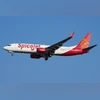
Spicejet
SpiceJet has raised ₹4,172.1 crore through the issuance of equity warrants and fresh equity shares on a preferential basis to various non-promoter investors in previous financial years. (Photo: Shutterstock)
Deepak Patel New Delhi
2 min read Last Updated : Sep 05 2025 | 11:40 PM IST
Budget carrier SpiceJet on Friday reported a consolidated net loss of ₹236.6 crore in the first quarter of 2025-26 (FY26) due to grounded planes awaiting maintenance, airspace restrictions and subdued passenger demand after the Air India plane crash on June 12. 
 
The airline had recorded a consolidated net profit of ₹158.6 crore in the first quarter of FY25.
 
"Non-operation of certain parts of the entire aircraft fleet for awaited maintenance, coupled with airspace restrictions owing to geopolitical tensions affected the profitability of the company during the quarter. Further, an event of a tragic accident in the Indian aviation sector also subdued the customer sentiment, substantially impacting the performance for the quarter," said Chairman and Managing Director Ajay Singh.
 
According to planespotters.com, SpiceJet currently has a total fleet of 53 aircraft, of which 19 are "in service" while 34 are "parked".
 
SpiceJet has raised ₹4,172.1 crore through the issuance of equity warrants and fresh equity shares on a preferential basis to various non-promoter investors in previous financial years. "These funds are being utilised for the return to service of the grounded fleet, fleet rationalisation and expansion into new sectors. The company also continues to implement cost-control initiatives with the objective of achieving consistent profitability and sustainable cash flows in the future," Singh noted.
 
The airline also settled past dues with certain vendors and lessors and is actively engaged in discussions with other vendors/lessors for settlement of outstanding obligations, he added.
 
The April 22 Pahalgam terror attack, which left 26 tourists dead, jolted air travel in the region and prompted airlines to add extra flights from Srinagar. Two days later, Pakistan closed its airspace to Indian carriers, forcing IndiGo and Air India to take longer, costlier routes to Europe and North America. The crisis deepened on May 7 with India’s Operation Sindoor, after which, 32 northern airports, including Srinagar, Jammu, Leh, Amritsar and Chandigarh, were shut for civilian flights. They remained closed for nearly a week before reopening on May 13. Pakistan’s airspace continues to be barred for Indian carriers. 
 
*Subscribe to Business Standard digital and get complimentary access to The New York Times

Smart Quarterly

₹900

3 Months

₹300/Month

SAVE 25%

Smart Essential

₹2,700

1 Year

₹225/Month

SAVE 46%
*Complimentary New York Times access for the 2nd year will be given after 12 months

Super Saver

₹3,900

2 Years

₹162/Month

Subscribe

Renews automatically, cancel anytime

Here’s what’s included in our digital subscription plans

Exclusive premium stories online

  • Over 30 premium stories daily, handpicked by our editors

Complimentary Access to The New York Times

  • News, Games, Cooking, Audio, Wirecutter & The Athletic

Business Standard Epaper

  • Digital replica of our daily newspaper — with options to read, save, and share

Curated Newsletters

  • Insights on markets, finance, politics, tech, and more delivered to your inbox

Market Analysis & Investment Insights

  • In-depth market analysis & insights with access to The Smart Investor

Archives

  • Repository of articles and publications dating back to 1997

Ad-free Reading

  • Uninterrupted reading experience with no advertisements

Seamless Access Across All Devices

  • Access Business Standard across devices — mobile, tablet, or PC, via web or app

More From This Section

Topics :SpiceJetQ1 resultsahmedabad plane crashAirspaceAviation sector

First Published: Sep 05 2025 | 7:10 PM IST

Next Story
