Home / Companies / Start Ups / Nuclear power startup CCTE wants to harness India's untapped deposits
Nuclear power startup CCTE wants to harness India's untapped deposits
CCTE seeking approvals for its fuel technology, which pairs the radioactive metal with enriched uranium and can be used in India's locally-made reactors
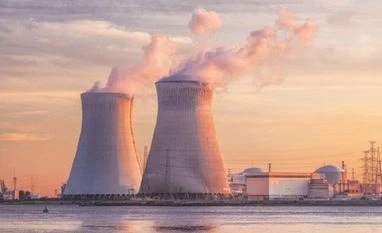
Representative Image: CCTE now plans to work with state-run NTPC Ltd. and engineering firm Larsen & Toubro Ltd. to deploy the new technology.
India’s distant goal of harnessing its vast thorium deposits for energy security could be advanced by a nascent US technology, according to the startup pioneering it.
US-based Clean Core Thorium Energy, or CCTE, is seeking approvals for its fuel technology, which pairs the radioactive metal with enriched uranium and can be used in India’s locally-made reactors, Chief Executive Officer Mehul Shah said in an interview.
Shah said the method, called Advanced Nuclear Energy for Enriched Life, could bolster nuclear energy as an option for cleaner baseload electricity in India, which depends on coal for nearly three quarters of its power.
The country has been looking to expand its limited nuclear capacity for years, first targeting large projects and later exploring the construction of small-scale reactors. India currently has 24 units with a combined capacity of 8.1 gigawatts, accounting for less than 2 per centof its total generation fleet.
CCTE now plans to work with state-run NTPC Ltd. and engineering firm Larsen & Toubro Ltd. to deploy the new technology in India, pending regulatory approvals from the US and Indian governments.
The early stage nuclear fuel combines enriched uranium with thorium. That’s a leap over India’s three-stage program, where thorium is used in the second stage, saving on reprocessing costs.
The innovation is undergoing tests at the Idaho National Laboratory and initial results have shown that the fuel produced as much as four times the irradiation levels of conventional reactors used in India, Shah said.
The findings have earned a cautious expression of interest from India’s Department of Atomic Energy, which will have to approve the technology before it can be tested in the country.

 "Nuclear power startup CCTE wants to harness India's untapped deposits")

