Missing in action: Dearth of domestic infra finance in energy sector

The resources of state-owned entities are too puny for the enormous requirements, especially in renewable energy
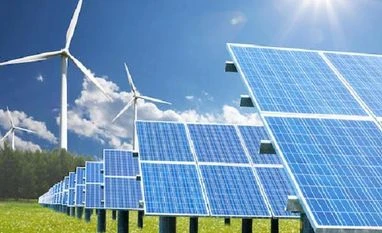
Renewable energy
Subhomoy Bhattacharjee New Delhi
5 min read Last Updated : May 31 2023 | 5:58 PM IST
As India logs into hitherto the largest-ever infrastructure build up, the array of government-run financial corporations are conspicuously low-key.

For decades, various government ministries have built up assorted financing companies. The Public Enterprises Survey of the Central government lists 27 of them with a total paid up capital of Rs 11.46 trillion. More than half of the sum is accounted for by Power Finance Corporation (PFC) and REC, of which PFC is a holding company, with Rs 6.05 trillion and another Rs 49,256 crore by India Infrastructure Finance Company Ltd. As the table shows, the rest are puny. 

Compared to the demand of over Rs 112 trillion that the National Investment Pipeline estimates India will need to raise, the resource base of these companies are negligible. 

For instance, of the Rs 80,000 crore PFC plans to raise in FY24, about half will be via domestic debt, which includes public issues, debt securities, tax-free bonds, term loan from banks, and other financial institutions. Most of the remaining Rs 40,000 crore will be raised abroad as syndicated loans, FCNR (B) loans, term loans, and bonds or notes, among others.

This dearth of domestic infrastructure finance is noticeable particularly in the renewable energy (RE) sector. It has implications. Globally how money is raised for the energy sector now matters a lot. Insurance companies are looking into every possible detail of how energy companies not only in the fossil fuel sector but also in RE have sourced their funds. The International Energy Agency estimates Indian demand will climb 3 per cent annually due to urbanisation and industrialisation. 

Given those numbers, it matters who brings in the money. Government-run financial agencies could have a head start in this respect as they can assure investors about the transparency of the funding route so as to bring down the costs.

Also, despite its promise, financing for RE like wind power and bio energy is difficult as the returns are often volatile. There is a huge demand for blended finance in this context. Blended finance means the “strategic use of public and philanthropic resources to mobilise private capital for development purposes” as defined by the RBI. The central bank’s recent report on currency and finance (May 2023) notes an additional annual investment of about 2.5 per cent of GDP would be required to replenish this infrastructure gap by 2030. 

The needs of both blended finance and that of a transparency framework mean it is the government-run financial arms that are best suited for the purpose. Also as a Carnegie India research paper notes “India’s climate finance strategy must include another pillar: a clear, significant increase in the R&D spend allocated to climate-related research”. Again, the government-run finance companies are best positioned to do this. 

Yet, despite these needs, the role of government sponsored infra finance companies in this transition is lethargic. In FY24, for instance, the centre will spend Rs 10 trillion as capex. The Indian Railways have lined up a massive Rs 2.4 trillion of capex spending in FY24. All of this will be financed by loans, known as Gross Budgetary Support from the Centre. Missing in action is the Indian Railway Finance Corporation, which was set up to raise such finance. 

Meanwhile, NTPC subsidiary NTPC Green Energy has announced it will raise Rs 9,000 crore just this year as term loans, and the myriad oil and gas companies plan to raise Rs 1.5 trillion by FY25. They are reaching out principally to the banks and institutions abroad. 

Not that the state-owned power, railway or oil and gas companies do not wish to do business with their brother infrastructure financing companies. There are three reasons for their hesitancy. First, the rates for loans offered by these infra financing companies are far higher than what the companies can raise on their own balance sheets in India or abroad. For instance, a ten-year RBI paper fetches between 7 and 8 per cent in the market. A loan raised by an infra company is necessarily costlier. Second, in the case of IRFC, for instance, the company has exhausted its borrowing capacity. The third reason is the most important. These companies have hardly placed themselves at the vanguard of the green finance revolution sweeping the world. So raising money from them does not bring any measurable benefit for the state-owned infrastructure firms.

One constraint is the low gearing requirements for energy sector companies in the Asia Pacific region. This restricts the room to bring in change by the lenders, argues Christina Ng, co-author of a report on the subject written for Institute for Energy Economics and Financial Analysis. “While these companies do not have high leverage levels, data shows an overwhelming use of bonds as a source of debt capital and changes can be brought here,” she argues.

Here too it is the Centre that has moved in. From January this year, the finance ministry has begun issuing sovereign green bonds as part of its borrowing programme. Yet if the companies look around they could also produce an enormous scale of innovations. An example is the Emissions Trading Systems or ETS. Several countries such as Mexico and China have launched pilot ETSs. As the RBI notes “The federal structure of India could help in implementing ETS pilot programmes across states”.

Last year, IIFCL Managing Director PR Jaishankar said the company plans to issue green bonds to finance RE projects. REC has established a Green Finance Framework modelled on the Green Bonds Principles of the International Capital Markets Association to evaluate which projects can be classified as green. But none of these institutions have taken the lead to establish industry-level standards, a surprising omission given the pace at which India is pushing for widening the green finance market globally.


One subscription. Two world-class reads.

Already subscribed? Log in

Subscribe to read the full story →
*Subscribe to Business Standard digital and get complimentary access to The New York Times

Smart Quarterly

₹900

3 Months

₹300/Month

SAVE 25%

Smart Essential

₹2,700

1 Year

₹225/Month

SAVE 46%
*Complimentary New York Times access for the 2nd year will be given after 12 months

Super Saver

₹3,900

2 Years

₹162/Month

Subscribe

Renews automatically, cancel anytime

Here’s what’s included in our digital subscription plans

Exclusive premium stories online

  • Over 30 premium stories daily, handpicked by our editors

Complimentary Access to The New York Times

  • News, Games, Cooking, Audio, Wirecutter & The Athletic

Business Standard Epaper

  • Digital replica of our daily newspaper — with options to read, save, and share

Curated Newsletters

  • Insights on markets, finance, politics, tech, and more delivered to your inbox

Market Analysis & Investment Insights

  • In-depth market analysis & insights with access to The Smart Investor

Archives

  • Repository of articles and publications dating back to 1997

Ad-free Reading

  • Uninterrupted reading experience with no advertisements

Seamless Access Across All Devices

  • Access Business Standard across devices — mobile, tablet, or PC, via web or app

Topics :renewable energyenergy sectorinfrastructure

Next Story


