Govt to clear ₹800 crore pending exporters' dues under revamped IES

The move aims to ease pressure on MSME exporters as the revamped Interest Equalisation Scheme is folded into the new Export Promotion Mission
US economy, exports
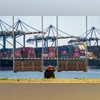
Currently, the scheme isn’t operational since the government didn’t extend it beyond December 31, 2024. (Image: Bloomberg)
Shreya Nandi New Delhi
2 min read Last Updated : Nov 19 2025 | 11:39 PM IST
The government is taking steps to soon clear exporters’ pending dues of ₹800 crore under the Interest Equalisation Scheme (IES), as it prepares to launch a revamped version of the IES under the recently-approved Export Promotion Mission (EPM), a senior government official said. 
This will provide relief to exporters, especially MSMEs that have been grappling with the global uncertainties, including the steep 50 per cent tariffs imposed  by the United States (US) on several  Indian products.
 
The outstanding amount pertains to the arrears till December 31, 2024, the official told Business Standard. 
Apart from clearing the arrears of exporters under the IES, the government will also clear dues worth around ₹300 crore under the Market Access Initiative (MAI) scheme.  MAI is an export promotion scheme, with a country and product-focused approach. IES is an interest subvention scheme, under which benefits in the interest rates charged by the banks are given to the exporters on their pre and post shipment rupee export credits. Lenders are thereafter compensated by the government. This allows exporters to be competitive in the international market. 
The scheme was launched in 2015 for a period of five years to reduce stress among exporters, especially under labour intensive sectors and MSMEs. Thereafter, the scheme has been extended periodically. 
Currently, the scheme isn’t operational since the government didn’t extend it beyond December 31, 2024. 
However, considering the ongoing global uncertainties, and repeated requests from exporters, the government has decided to subsume it under the EPM – which received the Union Cabinet’s approval last week. 
The scheme will be reintroduced and revamped, in line with contemporary trade needs. Only a select few sectors will be allowed to avail benefits from the scheme, and will be largely targeted towards MSMEs, instead of being ‘free-for-all’ kind of a scheme.
 

One subscription. Two world-class reads.

Already subscribed? Log in

Subscribe to read the full story →
*Subscribe to Business Standard digital and get complimentary access to The New York Times

Smart Quarterly

₹900

3 Months

₹300/Month

SAVE 25%

Smart Essential

₹2,700

1 Year

₹225/Month

SAVE 46%
*Complimentary New York Times access for the 2nd year will be given after 12 months

Super Saver

₹3,900

2 Years

₹162/Month

Subscribe

Renews automatically, cancel anytime

Here’s what’s included in our digital subscription plans

Exclusive premium stories online

  • Over 30 premium stories daily, handpicked by our editors

Complimentary Access to The New York Times

  • News, Games, Cooking, Audio, Wirecutter & The Athletic

Business Standard Epaper

  • Digital replica of our daily newspaper — with options to read, save, and share

Curated Newsletters

  • Insights on markets, finance, politics, tech, and more delivered to your inbox

Market Analysis & Investment Insights

  • In-depth market analysis & insights with access to The Smart Investor

Archives

  • Repository of articles and publications dating back to 1997

Ad-free Reading

  • Uninterrupted reading experience with no advertisements

Seamless Access Across All Devices

  • Access Business Standard across devices — mobile, tablet, or PC, via web or app

Topics :export normscentral governmentTrade exports

Next Story


