Prime Minister Narendra Modi on Thursday declared that India would “never compromise” on the interests of its farmers, livestock rearers, and fishermen even if it meant paying a “heavy personal price”, in a strong response to the United States doubling tariffs to 50 per cent on Indian exports. The Prime Minister’s statement signalled that New Delhi was unwilling to yield to Washington’s pressure for greater agricultural market access.
The government, according to people familiar with the matter, is working on a three-pronged strategy to support exporters threatened by the tariff hike. One approach involves launching a sector-specific support scheme under the proposed ₹2,250 crore Export Promotion Mission. Another centres on diversifying export destinations away from the US. The third measure could see surplus products redirected to meet domestic demand if American orders decline.
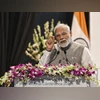
Speaking earlier at the M S Swaminathan Centenary International Conference, Modi said: “For us, the welfare of our farmers is of the highest priority. India will never compromise on the interests of its farmers, livestock rearers, and fishermen. And I am fully aware that I may have to pay a very heavy price personally, but I am prepared for it.”
Talks between India and the US on an interim trade deal collapsed last month with disagreements over American dairy products and genetically modified crops proving insurmountable.
In Washington DC, White House trade advisor Peter Navarro described India as the “Maharaja of tariff”. Defending US President Donald Trump’s decision to impose an additional 25 per cent levy on Indian goods for New Delhi’s purchase of Russian crude, Navarro said the move was driven by national security concerns. “The rationale for the Indian tariff is very different from the reciprocal tariff. This was a pure national security issue associated with India’s abject refusal to stop buying Russian oil,” he said. Earlier on August 1, the Trump administration had imposed a 25 per cent reciprocal tariff on Indian goods, on top of existing World Trade Organization-compatible duties.
Asked whether countries importing petroleum products from India could also face similar tariffs, Navarro said: “We are looking at that all. It’s got to stop. American dollars buy Indian products and that sets in motion where those dollars finance (Russian) war which then requires American taxpayers to pay for defending against the Russian armaments. That kind of trade doesn’t work.”
Three-pronged strategy
A person aware of the three-pronged support plan for exporters said schemes will be “tailor-made to specifically support sectors that will be adversely affected by the substantial hike in tariff”.
“There should be a focus on diversification of the export market, since disrupted world trade also creates opportunities. The Department of Commerce and the export promotion councils are closely analysing and looking for opportunities in regions other than the US,” the person said.
Exporters have warned that the US tariff hike is a significant blow, directly impacting nearly 55 per cent of India’s exports to the American market. Apparel and leather exporters are expected to be the hardest hit, especially as this is the period when orders for the summer season are placed.
On Thursday, exporters from the textiles and chemicals sectors met senior officials from the commerce and industry ministry to seek assistance. It is estimated that around 6 per cent of the industry will be directly affected by the higher tariffs. “The textile sector is one of the worst hit since it is a labour-intensive sector. Orders are generally long-term in nature, making the switch to export market diversion tricky,” a person familiar with the discussions said.
Exporters from these sectors have requested a five-year extension of the Rebate of State and Central Levies and Taxes (RoSCTL) and the Remission of Duties and Taxes on Exported Products (RoDTEP) schemes. They also called for a reduction in the compliance burden associated with the advance authorisation scheme and a cut in port charges.
Industry estimates suggest that 20 products in the chemicals sector will be adversely affected, accounting for around 75 per cent of the $6 billion worth of exports to the US.
The US remains India’s largest destination for merchandise exports. In FY24, India exported goods worth $86.5 billion to the US, an increase of 11.6 per cent over the previous year, while imports stood at $45.7 billion, resulting in a trade surplus of $40.8 billion.

 "PM draws the line amid US tariff heat, govt plans strategy for exporters")


